Tag: DOJ

  • DOJ-HHS Launch New Initiative to Combat Healthcare Fraud

    DOJ-HHS Launch New Initiative to Combat Healthcare Fraud

    July 2, 2025

    Washington, D.C.


    In a decisive move to enhance the fight against healthcare fraud, the U.S. Department of Justice (DOJ) and the Department of Health and Human Services (HHS) have taken significant action. They have launched the DOJ-HHS False Claims Act Working Group.

    This strategic alliance formalizes long-standing cooperation between the two agencies.

    It also shows how the False Claims Act (FCA) is used. This law protects federal healthcare programs from fraud, waste, and abuse.

    The Working Group will concentrate enforcement in seven key areas:

    • Medicare Advantage fraud, such as upcoding and inflated risk scores
    • Drug and device pricing manipulation, such as undisclosed rebates and improper discount arrangements
    • Access to care violations, including non-compliant provider networks
    • Kickback schemes, involving drugs, medical devices, and durable medical equipment
    • Defective medical devices that compromise patient safety
    • Electronic Health Records abuse, such as system manipulation to boost Medicare billing
    • Data-driven investigations, powered by cross-agency analytics and audit findings

    The new Working Group encourages whistleblowers to report false claims involving federal healthcare dollars related to specific enforcement priorities.

    At Find Corporate Waste, we spotlight whistleblower-driven accountability.

    If you become a relator under the False Claims Act, your role would expose fraud and recover taxpayer dollars.

    Becoming a relator is a serious decision.

    If you have inside information on healthcare contracts or schemes, we’re here to assist you.

  • Whistleblower Rewarded $1.4 Million in YAPP USA Case

    Whistleblower Rewarded $1.4 Million in YAPP USA Case

    YAPP USA Automotive Systems, Inc., a subsidiary ultimately owned by the Chinese government, has agreed to pay $14,208,496 to the United States. This agreement settles allegations that it improperly obtained and retained a Paycheck Protection Program (PPP) loan. These actions were in violation of the False Claims Act.

    The case was brought to light through a qui tam lawsuit filed under the False Claims Act by GNGH2 Inc., a private entity acting in the public interest.

    The whistleblower will receive $1,420,849 as a reward for its role in exposing the misconduct.

    Stacks of U.S. currency bundles, each secured with rubber bands, arranged neatly in a large pile.

    Find Corporate Waste is dedicated to recovering taxpayer money. These funds were given to foreign owned businesses. This occurred while Americans struggled to make ends meet during the pandemic.

    If you have information relating to potential False Claims Act violations, we are here to help you file your complaint. We aim to restore trust and accountability to the American procurement system.

  • Chicago Tech Executive Convicted in $55 Million Bank Fraud and PPP Scam

    July 2, 2025

    Rahul Shah, 56, of Evanston, Illinois, is facing decades in federal prison after being convicted for orchestrating a multi-million-dollar bank fraud and COVID-19 relief scam in which he defrauded financial institutions out of more than $55 million in commercial loans and PPP funds.

    Shah operated several information technology companies in the Chicago area and submitted fake documents to secure the funds.

    According to prosecutors, Shah falsified bank records, inflated revenues on financial statements, and forged audit reports to deceive federally insured lenders. He defaulted on several of the loans, leaving taxpayers on the hook.

    The fraud didn’t stop there. During the height of the COVID-19 pandemic, Shah filed bogus applications for Paycheck Protection Program (PPP) loans—falsely inflating payroll figures and submitting counterfeit IRS forms. Authorities say he also used stolen identities and tax information to qualify for pandemic aid, a tactic that earned him additional charges for aggravated identity theft.

    The evidence showed that the payroll numbers submitted to lenders were drastically higher than those reported to federal and state tax agencies. Investigators also found that the IRS forms Shah submitted had been doctored to mislead banks about his companies’ eligibility for SBA-backed loans.

    The jury returned a conviction on 16 counts, including:

    • 7 counts of bank fraud
    • 5 counts of making false statements to financial institutions
    • 2 counts of money laundering
    • 2 counts of aggravated identity theft

    Shah is set to be sentenced on November 13, and he faces up to:

    • 30 years for each bank fraud and false statement count
    • 10 years for each money laundering count
    • 2 years for each aggravated identity theft count

    The case was investigated by the FBI Chicago Field Office and the Small Business Administration Office of Inspector General (SBA OIG). It was prosecuted by the DOJ’s Criminal Division Fraud Section and the U.S. Attorney’s Office for the Northern District of Illinois.

    This conviction adds to a growing list of pandemic-related prosecutions. Since the CARES Act was passed, the DOJ has recovered more than $78 million in stolen PPP funds.

    Know something?
    If you have firsthand knowledge about PPP fraud or government contracting abuse, Find Corporate Waste encourages you to come forward. You can report potential COVID-19 fraud directly to the National Center for Disaster Fraud.

  • South Carolina Man Charged in Medicare and Private Jet Fraud Schemes

    Generated image

    This next case exemplifies how taxpayer dollars have been abused, and demonstrates the importance of recovering such funds when obtained under false circumstances.

    Two separate federal indictments allege that Patrick Britton-Harr, a 41-year old businessman from Charleston, South Carolina, used his company, Provista Health, to fraudulently bill Medicare more than $15 million for respiratory pathogen panel (RPP) tests during the COVID-19 Pandemic.

    The government alleges that over $5 million was paid out by Medicare for these bogus claims.

    In addition, Britton-Harr ran a Ponzi scheme where he banked $1.5 million in payments from individuals who allegedly trusted him to purchase airplanes for their usage as part of an exclusive group through the corporation AeroVanti Inc.

    At Find Corporate Waste, we illustrate the critical role that the False Claims Act serves in safeguarding taxpayer funds. While the indictments do not directly mention a qui tam relator in this case, this tool can be used to recover government funds in cases relating to Defense and National Security, Manufacturing and Tariffs, and PPP Loans.

  • Swiss-Owned Company Pays $2.3M to Settle PPP Fraud Case Triggered by Whistleblower

    In a decisive action against pandemic relief fraud, Zund America, Inc., based in Oak Creek, Wisconsin, has agreed to pay $2.3 million to resolve allegations it falsely certified eligibility for a federal Paycheck Protection Program (PPP) loan. The investigation was prompted by a whistleblower complaint under the False Claims Act (FCA), once again affirming the critical role private citizens play in holding corporations accountable.

    In February 2021, Zund America received a second-draw PPP loan—a type of loan restricted to businesses with 300 or fewer employees, including their affiliates. However, Zund America is owned by Zund Holding AG, a Swiss parent company with a global network of 19 affiliated entities, collectively employing well over that limit.

    Despite these clear affiliations, Zund America certified its eligibility and received taxpayer-backed funds. The Small Business Administration (SBA) later repaid the loan, effectively passing the cost to American taxpayers.

    This case might have gone unnoticed if not for a qui tam complaint filed under the False Claims Act by GNGH 2, Inc., a whistleblower entity. Qui tam provisions allow private parties to sue on behalf of the U.S. government and receive a portion of the recovery. As a result of the whistleblower’s tip, the government recovered the full loan amount plus penalties.

    The case, filed as United States ex rel. GNGH 2, Inc. v. Zund America, Inc. (No. 24-cv-0661), was prosecuted in the Eastern District of Wisconsin, with Assistant U.S. Attorney Michael Carter representing the government.

    At Find Corporate Waste, we shine a light where others look away—because every stolen dollar is a theft from the American people, and we’re here to take it back.

  • Texas Physician to Pay $3.5M for Fraudulent COVID Billing Scheme Targeting Uninsured Program

    The U.S. Attorney’s Office for the Eastern District of Texas announced that Dr. Samad Khan has agreed to pay $3.5 million to resolve allegations of fraudulent billing to the federal government—thanks to a federal investigation targeting misuse of emergency pandemic funds.

    Dr. Samad Khan, owner of SK Primary Care, PLLC, was accused of submitting false claims to the COVID-19 Uninsured Program, which reimbursed providers for testing and treatment of uninsured individuals during the public health emergency. From April 2020 to October 2021, Khan allegedly billed for evaluation and management (E/M) services that were never performed.

    Under the Current Procedural Terminology (CPT) coding system, higher-level E/M services (CPT 99202–99205, 99212–99215) are intended to reflect complex medical care requiring direct attention by a physician or qualified healthcare provider.

    Patients at Khan’s walk-up and drive-through COVID test sites were allegedly not evaluated by any licensed providers—only medical assistants conducted nasal swabs, a service properly billed under CPT 99211.

    Khan allegedly submitted approximately 400,000 claims under higher-level codes and was the sole rendering provider listed. Many of the claims were for duplicated visits, with one charge for the test and another for delivering results—often via automated message, not through medical consultation.

    “These were not medical appointments,” said Acting U.S. Attorney Jay R. Combs. “Patients received a nasal swab and later got a text message with their results. Yet the government was billed for comprehensive office visits.”

    According to the complaint, Khan, in coordination with SK Primary Care’s management company, used inflated codes to maximize reimbursement from the Uninsured Program. The scheme generated millions in overpayments—diverting public funds meant to support pandemic response for those without health insurance.

    Find Corporate Waste is tracking a growing number of fraud cases involving COVID-19 relief funds—an urgent reminder that emergency spending, no matter how critical, requires oversight. Whistleblowers and investigators remain essential to protecting the integrity of public programs.

  • Lockheed Martin Pays $70 Million to Settle False Claims Allegations Over Defective Pricing in Missile Contracts

    In a significant enforcement action announced by the U.S. Department of Justice, Lockheed Martin Corporation has agreed to pay $70 million to resolve allegations that it violated the False Claims Act (FCA) by submitting defectively priced contracts for missile sales to the Department of Defense.

    Click For Details

    The case centers on the Terminal High Altitude Area Defense (THAAD) system, a key component of U.S. missile defense architecture. DOJ officials alleged that Lockheed Martin’s subcontractor, L3Harris Technologies, intentionally provided inaccurate cost data during negotiations, which Lockheed Martin then passed on to the government without adequate disclosure or correction. As a result, the U.S. Army Missile Command allegedly awarded contracts based on inflated cost and pricing data, causing the government to overpay for missile components.

    This case was brought to light by a private whistleblower, known legally as a relator, who filed a lawsuit under the qui tam provisions of the False Claims Act. These provisions empower private citizens to sue on behalf of the federal government when they possess non-public evidence of fraud involving taxpayer dollars.

    In return, whistleblowers may be eligible to receive a portion of the recovery. In this case, the relator will receive $13.7 million from the settlement—a recognition of the role that private citizens can play in holding large corporations accountable.

    At Find Corporate Waste, we believe that the integrity of public spending starts with accountability. This case against Lockheed Martin highlights how whistleblowers can protect taxpayer dollars and expose fraudulent schemes that would otherwise go unchecked. We are committed to supporting those who step forward, guiding them through the complex landscape of False Claims Act litigation, and ensuring their efforts lead to meaningful recovery for the American people. If you have information about fraud, waste, or abuse of government funds, Find Corporate Waste is here to help you take the first step.

  • Whistleblower Action Exposes Corporate Waste and Tariff Evasion in $8.1 Million FCA Settlement

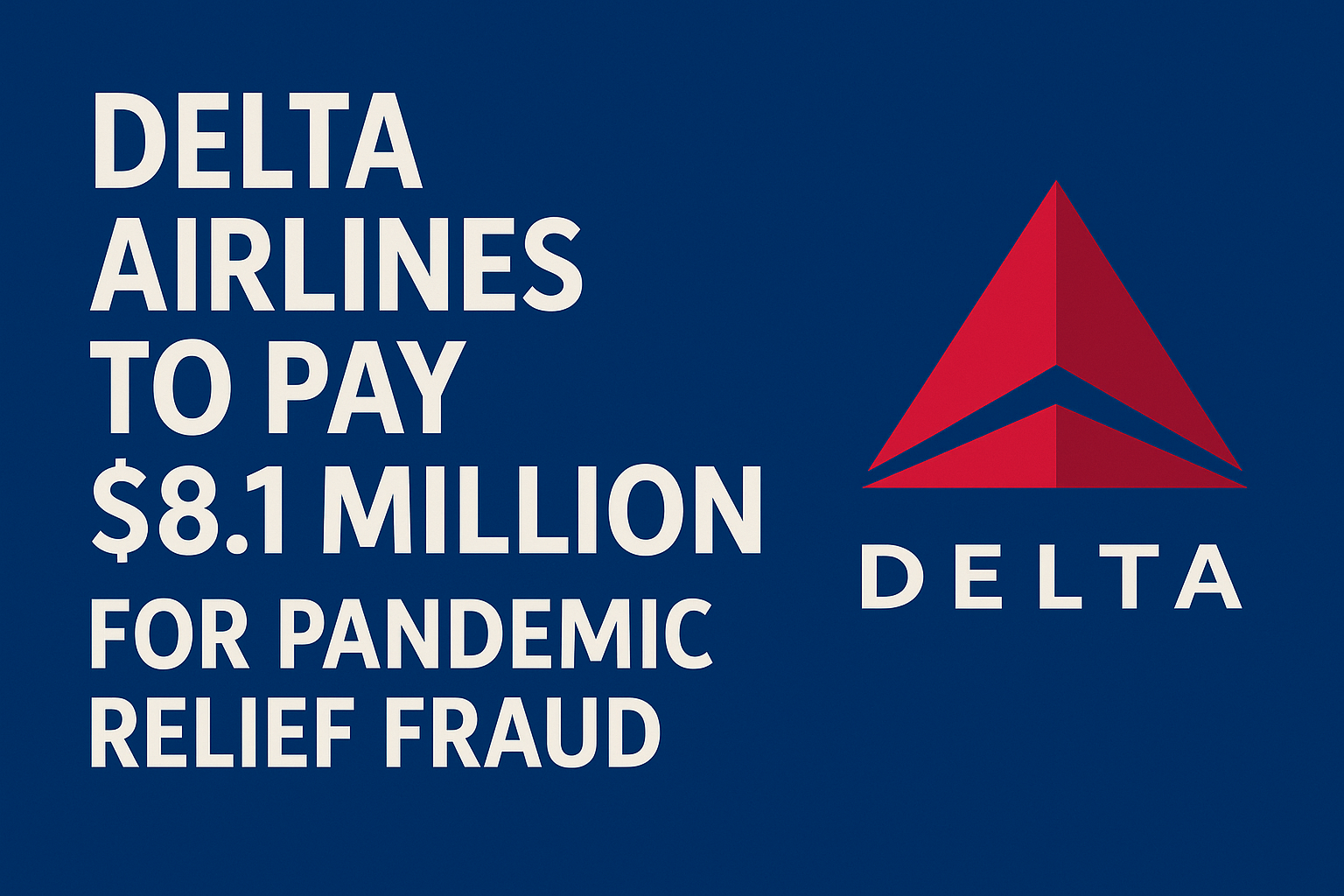
    In a recent settlement announced by the U.S. Department of Justice, a California-based flooring company agreed to pay $8.1 million to resolve allegations of customs fraud—thanks to the actions of a whistleblower acting under the False Claims Act’s qui tam provision.

    Evolutions Flooring Inc., along with its owners Richard and Brian Abcarian, was accused of evading U.S. import duties by falsely labeling Chinese-manufactured flooring products as originating from Malaysia. Between 2011 and 2019, the company allegedly used this scheme to circumvent anti-dumping and countervailing duties imposed on multilayered wood flooring from China.

    Under federal trade laws, importers must truthfully declare the country of origin for all goods entering the United States. The government alleged that Evolutions Flooring submitted false documentation to U.S. Customs and Border Protection, routing shipments through Malaysia to avoid tariffs—triggering False Claims Act liability.

    This case was brought to light not by routine customs enforcement—but by a private individual known legally as a relator. Under the qui tam provision of the False Claims Act, private citizens with knowledge of fraud against the federal government may file lawsuits on its behalf. If the case leads to a financial recovery, the whistleblower may receive a share of the settlement.

    The False Claims Act remains a vital tool for preventing fraud — not only in healthcare and government contracting, but increasingly in the international trade sector. As global supply chains expand and duty circumvention schemes grow more complex, whistleblowers will remain an essential source of investigative leads for enforcement.

  • Whistleblower Action Uncovers Medicare Billing Fraud in Lehigh Valley

    In a recent settlement announced by the U.S. Attorney’s Office for the Eastern District of Pennsylvania, a Lehigh Valley-based doctor agreed to pay $45,000 to resolve allegations of healthcare fraud—thanks to the actions of a whistleblower acting under the False Claims Act’s qui tam provision.

    Dr. Stephen Renn of Bethlehem was accused of submitting claims to Medicare and Medicaid for psychotherapy services without the required supporting documentation between 2016 and 2020. Under federal rules, physicians must maintain detailed records to justify billing levels. The government alleged that Dr. Renn failed to do so, triggering False Claims Act liability.

    This case was brought to light not by internal audits or regulators—but by a private individual known legally as a relator.

    Under the qui tam provision of the False Claims Act, private citizens with evidence of fraud against federal programs can file lawsuits on behalf of the U.S. government. If the case results in a financial recovery, the whistleblower may receive a portion of the settlement.

    Although the relator remains anonymous, their role was essential. Without their initiative, this case—and the associated improper billing practices—may never have been uncovered.

    The settlement, while not an admission of guilt, underscores the growing importance of whistleblowers in protecting taxpayer dollars and ensuring healthcare compliance. It also serves as a warning to other providers: inadequate documentation can lead to legal and financial consequences.

    This case is another example of how the False Claims Act continues to serve as a powerful tool for fraud prevention, especially in the healthcare sector. With billions of dollars flowing through programs like Medicare and Medicaid, the government relies heavily on individuals to report wrongdoing.

    As healthcare spending continues to rise, so does the potential for abuse. But as this case proves, one person—armed with information and the courage to act—can help ensure accountability and recover public funds.

    FCW remains committed to exposing similar patterns of fraud nationwide—ensuring that every taxpayer dollar is accounted for and every violation brought to light.