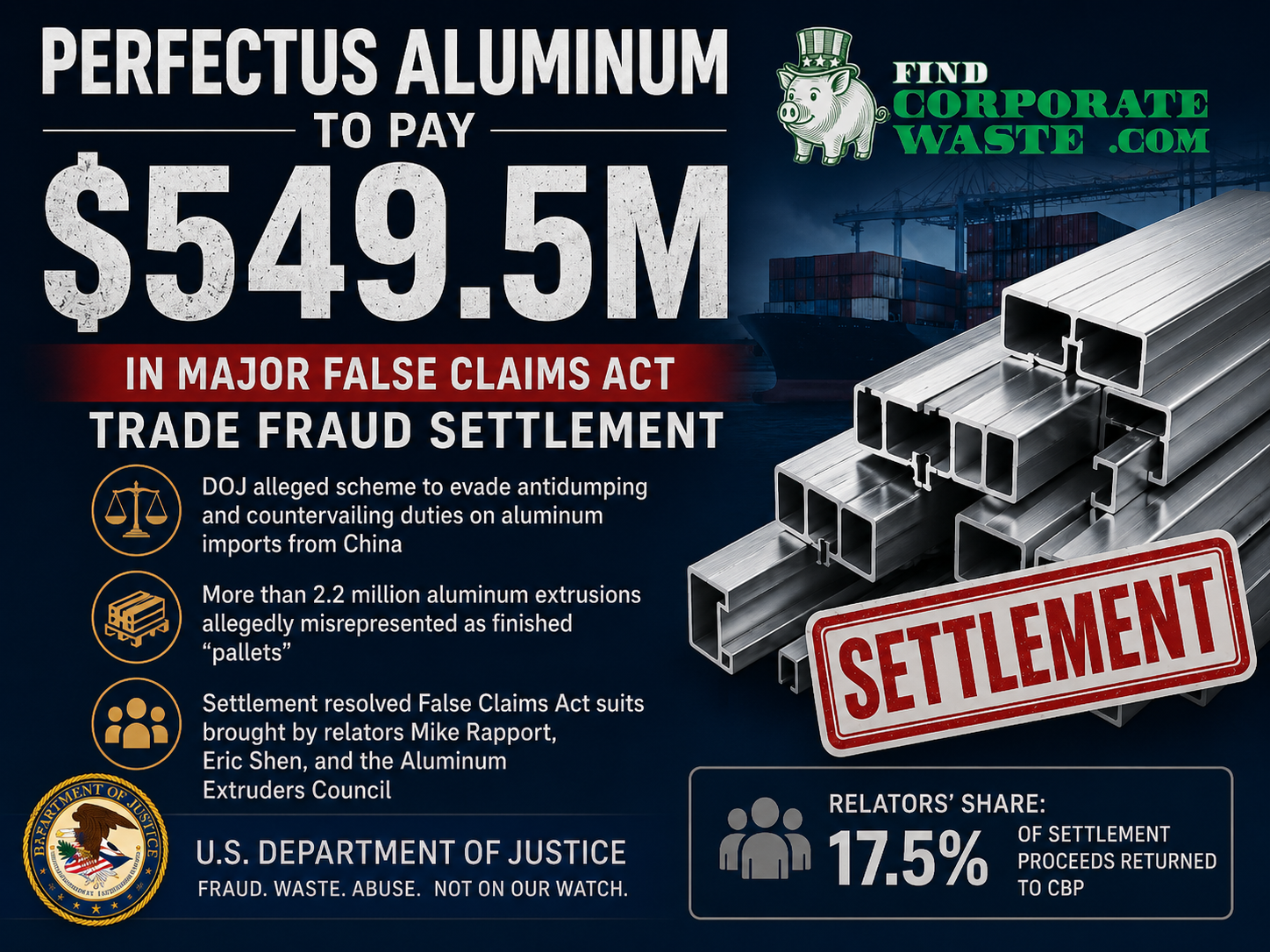
Perfectus Aluminum Inc. and related California-based companies have agreed to pay $549.5 million to resolve False Claims Act allegations tied to evaded customs duties on aluminum imports from China. The Department of Justice announced the settlement on May 12, 2026, calling it part of a broader enforcement push against fraud, waste, and abuse in federal programs.
The DOJ alleged that Perfectus Aluminum Inc., Perfectus Aluminum Acquisitions LLC, and affiliated warehousing companies knowingly avoided antidumping and countervailing duties owed to U.S. Customs and Border Protection.
According to the government, the companies imported more than 2.2 million aluminum extrusions from China and misrepresented them as finished “pallets” not subject to those duties.
DOJ said the so-called pallets were merely aluminum extrusions spot-welded together to appear functional, and that no customers existed for them and no pallets were ever sold.
When an importer falsely avoids tariffs, the government loses revenue, U.S. companies face unfair competition, and legitimate businesses are forced to compete against a rigged price structure.
The case also shows why the False Claims Act remains one of the federal government’s strongest tools. The settlement resolved lawsuits brought by whistleblowers under the FCA’s qui tam provisions. Those provisions allow private parties to sue on behalf of the United States and share in the recovery. In this case, the relators’ share will be 17.5% of the settlement proceeds returned to Customs and Border Patrol (CBP).
The DOJ connected the settlement to the Administration’s broader fraud enforcement infrastructure, including the Task Force to Eliminate Fraud, the National Fraud Enforcement Division, and the DOJ’s Trade Fraud Task Force. The Department said FCA enforcement will remain central to recovering taxpayer money and holding wrongdoers accountable.
Whether the issue involves evaded tariffs, pandemic relief funds, federal healthcare payments, or other taxpayer-backed programs, the same basic enforcement principle applies.
When companies obtain or retain federal money by misrepresentation, omission, or false certification, the False Claims Act gives the government—and whistleblowers—a path to recover the funds.
The Perfectus settlement is a major reminder that corporate fraud is often hidden in records that look routine.
Find Corporate Waste will continue reviewing public datasets, federal spending records, exclusion lists, and enforcement releases to identify cases where companies may have received or retained taxpayer funds they were not entitled to keep.
When companies exploit federal programs for private gain, they do not just cheat the government. They cheat taxpayers, honest businesses, and the people those programs were created to protect.
