Category: Banking Institutions

  • VSoft to Pay Nearly $2.3M Over PPP Eligibility Allegations

    VSoft to Pay Nearly $2.3M Over PPP Eligibility Allegations

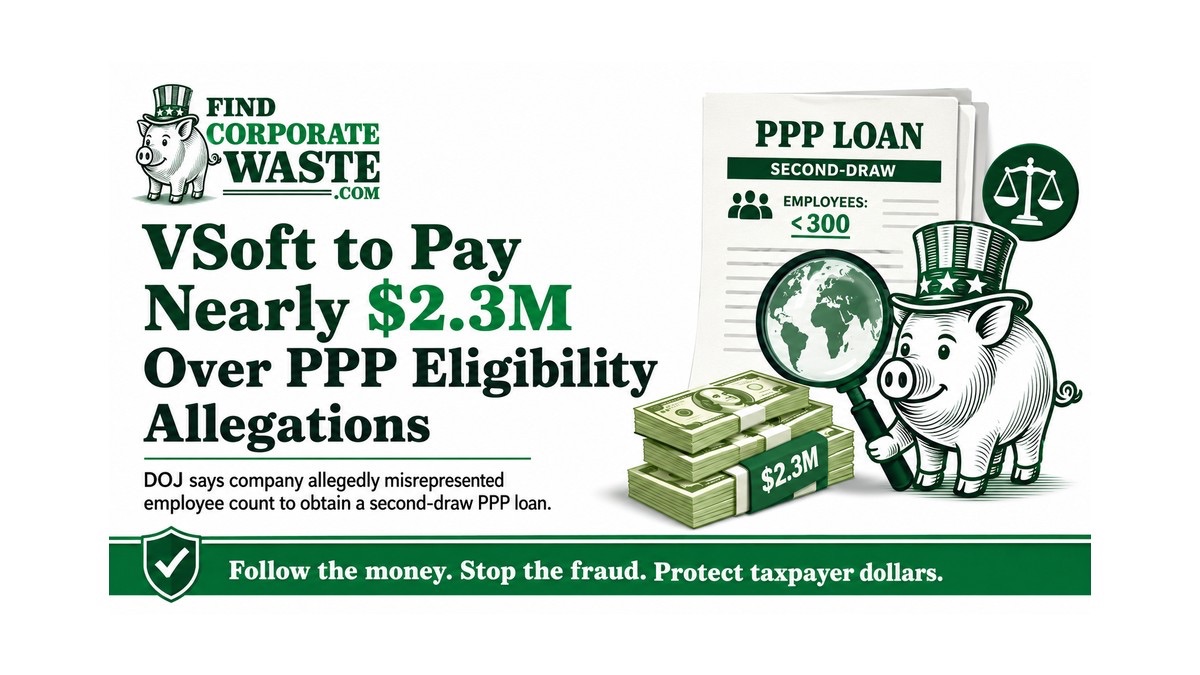
    VSoft Corporation has agreed to pay $2,291,927.07 to resolve False Claims Act allegations that it improperly obtained a second-draw Paycheck Protection Program loan.

    According to the DOJ, VSoft, an Atlanta-based banking and payment solutions provider, allegedly certified that it qualified as a small business with fewer than 300 employees when applying for a $1,259,732 PPP loan. Prosecutors alleged that VSoft was actually part of an international corporate structure with multiple locations worldwide and employee totals well above the second-draw PPP limit.

    This is exactly the kind of case Find Corporate Waste was built to track: follow the money, stop the fraud, and protect taxpayer dollars. Pandemic relief was designed to keep legitimate small businesses alive, not to subsidize companies that allegedly avoided size and affiliation rules.

    The case began as a whistleblower action under the False Claims Act: United States ex rel. GHGH2, Inc. v. Vsoft Technologies Corporation, Case No. 3:24-cv-999 (W.D.N.C.).

    The settlement resolves allegations only, with no determination of liability. But the message is clear: insiders, competitors, lenders, and data reviewers remain essential to exposing improper relief claims and helping recover public funds.

  • Regions Bank to Pay $4.9M Over Ineligible PPP Forgiveness Approval

    Regions Bank to Pay $4.9M Over Ineligible PPP Forgiveness Approval

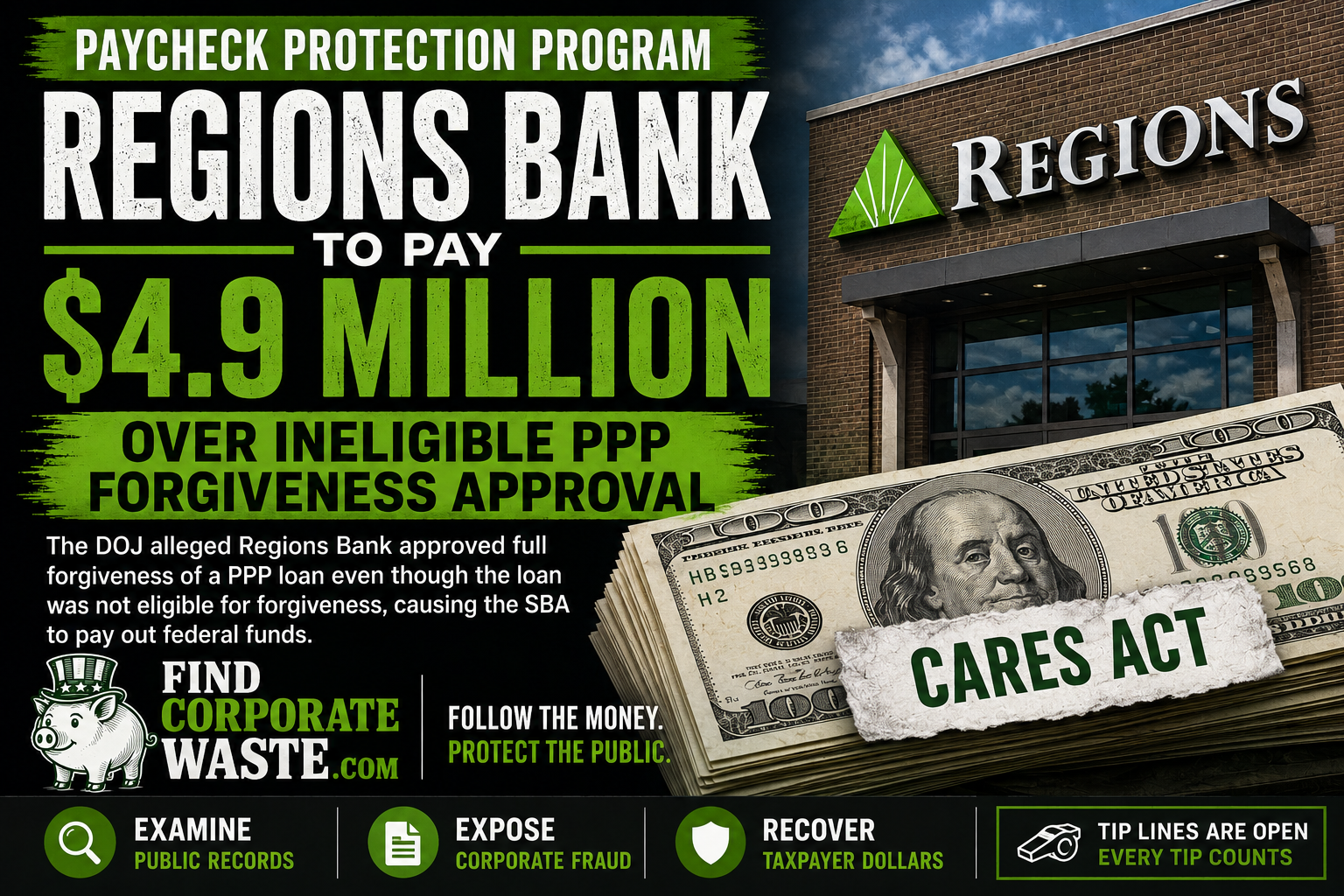
    Regions Bank has agreed to pay the United States $4.9 million to resolve civil allegations connected to a Paycheck Protection Program loan forgiveness approval that the government says should not have been granted.

    According to the DOJ, the matter involved a PPP loan obtained by Gregory A. DeLine, who owned or operated several businesses, including Midwest Mortgage Associates Corporation d/b/a Total Lending Concepts, Amega Sales Inc., and GKD Management, L.P.

    The government alleged that Regions approved full forgiveness of the loan even though the loan was not eligible for forgiveness.

    The public settlement documents do not identify the exact defect that made the loan ineligible. That distinction matters. The case should not be overstated as a public finding that the borrower committed fraud or that Regions admitted wrongdoing.

    The DOJ framed the civil resolution against Regions under an unjust enrichment theory, meaning the government alleged Regions received money it should not have received after approving forgiveness.

    The Paycheck Protection Plan (PPP) was created under the CARES Act to provide emergency relief during the COVID-19 pandemic. Borrowers could seek forgiveness if funds were used for payroll and other approved expenses. Once forgiveness was approved, the SBA paid the lender the forgiven principal and interest.

    For Find Corporate Waste, this case highlights why public-data review must examine the full structure of relief programs: borrower eligibility, certifications, lender review, forgiveness approval, and federal reimbursement. A single improper forgiveness approval can create millions in taxpayer exposure.

    Public records can identify the pattern, but insider knowledge transform that pattern into an actionable lead potentially worth millions.