Category: Uncategorized

  • Misuse of NIH Grants: Dana-Farber’s $15M Legal Consequences

    Misuse of NIH Grants: Dana-Farber’s $15M Legal Consequences

    Overview of the Dana-Farber False Claims Act Settlement

    Find Corporate Waste reports that on December 16, 2025, the Dana-Farber Cancer Institute Inc. agreed to pay $15 million to resolve allegations that it violated the False Claims Act by making materially false statements and certifications related to National Institutes of Health research grants.

    Federal authorities alleged Dana-Farber misused NIH funding and caused false claims to be submitted to the agency between 2014 and 2024.

    Statement of Resolution Agreement: Department of Justice+1

    Allegations of Falsified Data in NIH-Funded Research

    The DOJ alleged that research supported by six NIH grants had led to numerous scientific publications containing misrepresented or duplicated images and data.

    These included reused figures presented as different experimental outcomes and manipulated imagery across multiple testing conditions.

    Department of Justice

    Misuse of Federal Research Grants and Unallowable Expenses

    Dana-Farber admitted it spent federal research funds on activities and expenses that were unallowable under NIH grant terms. Prosecutors maintained that these actions constituted misuse of taxpayer-funded research grants and breached federal stewardship obligations. Department of Justice

    Whistleblower Lawsuit and Qui Tam Recovery

    This matter originated from a qui tam complaint filed by whistleblower Sholto David under the False Claims Act. Under the settlement terms, the relator will receive approximately $2.625 million, reflecting the FCA’s whistleblower recovery provisions. Department of Justice+1

    Federal Enforcement and Interagency Effort

    The resolution resulted from coordinated enforcement by the Department of Justice and the Department of Health and Human Services Office of Inspector General.

    For more information about this effort: DOJ-HHS Launch New Initiative to Combat Healthcare Fraud

    Why This Case Matters for Federally Funded Medical Research

    The Dana-Farber Settlement demonstrates how integral the False Claims Act is to stopping massive fraud and abuse of government money.

    If you have credible information about misuse of federal funds, fraud, or false claims like those described above, you may be able to report it as a whistleblower under the False Claims Act and potentially receive a share of any government recovery.

    Find Corporate Waste can help you understand your options and connect you with experienced counsel to evaluate and report your information securely.

    Contact us to learn how your insight can hold fraud accountable and protect taxpayer dollars.

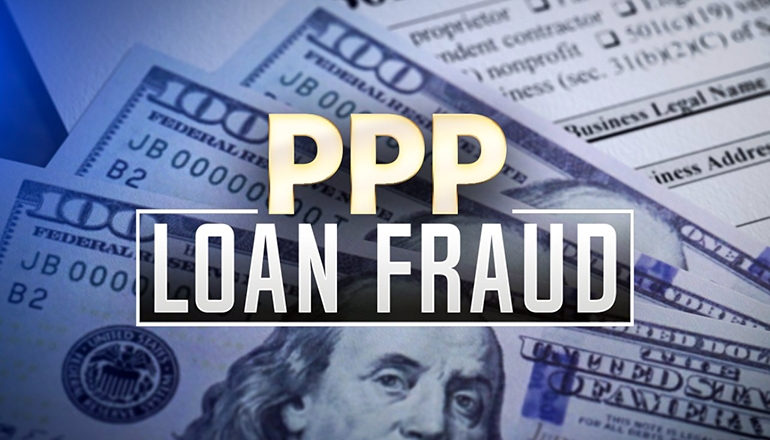
  • Setterstix Inc. Settles $1.76M Over PPP Loan Fraud

    Setterstix Inc. Settles $1.76M Over PPP Loan Fraud

    Setterstix Inc. is a manufacturer best known for producing paper sticks used in food and medical products. The company has agreed to pay $1,757,603.65 to resolve federal allegations that it improperly obtained a $571,862 Paycheck Protection Program (PPP) loan.

    The settlement was announced by the U.S. Attorney’s Office for the Western District of New York.

    DOJ Targeted Setterstix Over PPP Eligibility

    The Paycheck Protection Plan (PPP) program required applicants to certify that they met strict criteria, including:

    • U.S.-based operations
    • Domestic control or qualifying ownership structures
    • Adherence to SBA size standards and affiliation rules

    Federal prosecutors allege Setterstix did not meet those requirements. PPP loans were disbursed based on self-certifications. Any inaccurate or misleading statement, whether intentional or not, can constitute a “false claim” under 31 U.S.C. § 3729.

    The DOJ‘s intervention shows the Trump Administration’s continued strategy. They use the False Claims Act to recover pandemic-era financial relief.

    Treble Damages: How a PPP Loan Tripled in Cost

    Under the False Claims Act, companies may be liable for:

    • Treble damages (three times the government’s loss)
    • Civil penalties assessed per false claim
    • Mandatory repayments of improperly obtained funds

    In this case, the government sought more than just the original loan amount.

    ProPublica Data Confirms Loan Fraud

    The ProPublica PPP database shows:

    • Loan Amount: $571,862
    • Date Approved: April 8, 2020
    • Industry: Manufacturing
    • Program: First-draw PPP loan

    How Find Corporate Waste (FCW) Uncovers Cases Like Setterstix

    At Find Corporate Waste (FCW), we specialize in identifying the discrepancies that led to the $1.76 million settlement with Setterstix Inc.

    Our investigation model is built on cross-referencing databases the government maintains but fails to connect. We aim to detect patterns that suggest fraud, waste, and abuse.

    These cases are not rare, they are actually just a symptom of the broader pattern of pandemic relief fraud. For more information about these cases, or to report potential waste of federal funds, reach out to info@findcorporatewaste.com and be sure to subscribe.

  • Radioactive Waste Contractor Pays $6.5M to Settle False Claims Act Suit Filed by Qui Tam Whistleblower

    Radioactive Waste Contractor Pays $6.5M to Settle False Claims Act Suit Filed by Qui Tam Whistleblower

    The False Claims Act is the most powerful tool that the American people have to demand accountability from massive service providers that do business with the federal government.

    Today, the Department of Justice announced that Washington River Protection Solutions, LLC (WRPS) has agreed to pay $6.5 million to settle allegations of fraud made against the company, which is hired to manage radioactive waste at the Hanford Site in Washington State.

    At the center of the case is Devin Harmon, a former radiological control technician at WRPS. He realized that the company, which is set to receive $11 billion for Department of Energy contract DEAC2708RV14800, was charging the American people for non-existent labor.

    In December 2022, Harmon filed a qui tam lawsuit under the False Claims Act, which allows private citizens to sue on behalf of the U.S. government and share in any financial recovery. The government intervened and confirmed that WRPS charged DOE for labor hours in which employees performed no work, knowingly inflating costs in violation of contract terms.

    Since WRPS admitted key facts about its conduct and agreed to pay $3 million in restitution, Harmon will receive nearly $1.5 million plus another $800,000 in attorney fees and costs. Becoming a relator is a very serious decision, Find Corporate Waste is here to help guide you through the process. If you have firsthand knowledge about contracts that may be subject to FCA enforcement, you are urged to reach out by leaving a confidential message below.

    ← Back

    Thank you for your response. ✨

  • U.S. Fashion Manufacturer Pays $7.6M to Resolve Tariff Evasion Case Under False Claims Act

    MIAMI – A high-end fashion manufacturer has agreed to pay $7.69 million to settle allegations of customs fraud. They have also agreed to pay for tariff evasion. This agreement follows a whistleblower lawsuit. It was filed under the False Claims Act (FCA).

    Alexis, LLC, a Miami-based womenswear company, faced accusations. They allegedly deliberately undervalued imported apparel from overseas manufacturers. This was done to evade paying full U.S. customs duties. The scheme allegedly spanned from 2015 to 2022, and violated federal trade and customs reporting requirements enforced by U.S. Customs and Border Protection (CBP).

    Manufacturing Fraud Meets Federal Accountability

    The case was brought under the FCA’s qui tam provisions. This allows a private whistleblower—known legally as a relator—to file suit on behalf of the government. The Department of Justice later intervened. They cited years of tariff evasion.

    The company ultimately settled the allegations for $7.69 million, avoiding protracted litigation while acknowledging the government’s claims of false customs declarations.

    Whistleblower Role in Customs Fraud Enforcement

    The whistleblower’s identity remains undisclosed, but under the FCA, the relator may receive 15% to 30% of the recovered funds. This reward structure motivates employees, suppliers, and insiders. It encourages them to report fraud in manufacturing and international trade. The focus is on schemes designed to avoid duties or mislead federal agencies.

    FCA and Import Duty Enforcement: Why This Matters

    Under the Trump Administration, the U.S. government continues to ramp up enforcement against manufacturers and importers who manipulate declared values to evade tariffs. These schemes distort fair competition and deprive federal programs of crucial revenue.

    This settlement confirms that tariff evasion is not a victimless crime—it’s a form of fraud with broad consequences for U.S. taxpayers, compliant manufacturers, and economic fairness.


    Find Corporate Waste is committed to exposing fraud in global trade, manufacturing, and federal procurement. If you have evidence of import fraud, tariff evasion, or customs violations, contact us. Discuss your right to file under the False Claims Act.


  • Whistleblower Action Uncovers Medicare Billing Fraud in Lehigh Valley

    In a recent settlement announced by the U.S. Attorney’s Office for the Eastern District of Pennsylvania, a Lehigh Valley-based doctor agreed to pay $45,000 to resolve allegations of healthcare fraud—thanks to the actions of a whistleblower acting under the False Claims Act’s qui tam provision.

    Dr. Stephen Renn of Bethlehem was accused of submitting claims to Medicare and Medicaid for psychotherapy services without the required supporting documentation between 2016 and 2020. Under federal rules, physicians must maintain detailed records to justify billing levels. The government alleged that Dr. Renn failed to do so, triggering False Claims Act liability.

    This case was brought to light not by internal audits or regulators—but by a private individual known legally as a relator.

    Under the qui tam provision of the False Claims Act, private citizens with evidence of fraud against federal programs can file lawsuits on behalf of the U.S. government. If the case results in a financial recovery, the whistleblower may receive a portion of the settlement.

    Although the relator remains anonymous, their role was essential. Without their initiative, this case—and the associated improper billing practices—may never have been uncovered.

    The settlement, while not an admission of guilt, underscores the growing importance of whistleblowers in protecting taxpayer dollars and ensuring healthcare compliance. It also serves as a warning to other providers: inadequate documentation can lead to legal and financial consequences.

    This case is another example of how the False Claims Act continues to serve as a powerful tool for fraud prevention, especially in the healthcare sector. With billions of dollars flowing through programs like Medicare and Medicaid, the government relies heavily on individuals to report wrongdoing.

    As healthcare spending continues to rise, so does the potential for abuse. But as this case proves, one person—armed with information and the courage to act—can help ensure accountability and recover public funds.

    FCW remains committed to exposing similar patterns of fraud nationwide—ensuring that every taxpayer dollar is accounted for and every violation brought to light.

  • GPS Manufacturer Agrees to Pay $2.6 Million to Settle False Claims Act Allegations Relating to Improper PPP Loan

    PHOENIX, AZ – Hemisphere GNSS (USA) Inc., a satellite-based GPS manufacturer now owned by CNH Industrial, has agreed to pay $2.6 million to settle allegations that it improperly obtained and received forgiveness for a second-draw Paycheck Protection Program (PPP) loan by misrepresenting its eligibility under federal rules. The allegations were brought to light by GNGH2 Inc., a private entity that filed a qui tam lawsuit under the False Claims Act.

    The case, filed in the District of Arizona (United States ex rel. GNGH2, Inc. v. Hemisphere GNSS (USA) Inc., 2:22-cv-00224), claimed that Hemisphere falsely certified it was eligible for PPP funds by asserting that it was not owned or substantially controlled by a Chinese entity. Specifically, the company certified that it:

    • Had no 20% or greater ownership interest held by any entity organized under the laws of the People’s Republic of China.
    • Did not retain any board member who was a resident of China.

    According to the Department of Justice, both certifications were false at the time they were made in February 2021, and therefore, Hemisphere was ineligible to receive the loan or its subsequent forgiveness.

    Whistleblower Rewarded

    Thanks to the whistleblower complaint initiated by GNGH2 Inc., the case resulted in full resolution without a trial. Under the False Claims Act’s qui tam provisions, the whistleblower is entitled to a share of the recovery. In this case, GNGH2 Inc. will receive $260,000.

    Why It Matters

    This case is yet another reminder that pandemic relief programs, while essential, were vulnerable to exploitation. It also underscores the importance of vigilant private parties—like GNGH2—who come forward with credible information.

    At Find Corporate Waste, our mission is to help whistleblowers with material knowledge of fraud connect to legal experts who can pursue False Claims Act recoveries on behalf of the government. This settlement shows the power of that connection.