Tag: Qui Tam

  • FCW Welcomes DOJ FOCUS Initiative to Combat Waste, Fraud, and Abuse With Data Science

    FCW Welcomes DOJ FOCUS Initiative to Combat Waste, Fraud, and Abuse With Data Science

    The Department of Justice’s Civil Division has announced the new FOCUS initiative, short for Fraud Oversight through Careful Use of Statistics. The initiative is aimed at data miners who use public government records to identify potential False Claims Act cases. Find Corporate Waste has developed a sophisticated methodology for addressing Medicare Fraud committed during the COVID-19 Pandemic.

    DOJ Is Recognizing What Serious Data Miners Already Know

    For years, traditional whistleblower cases have often depended on insiders: employees, contractors, billing staff, compliance officers, or executives who saw misconduct from the inside.

    Under the leadership of Acting Attorney General Todd Blanche, the federal government now appears to be recognizing that some fraud patterns can also be found by carefully analyzing public records, payment data, provider databases, and regulatory rules.

    DOJ made clear that it welcomes data miners, but not sloppy work. The Department says it will prioritize data miners who can explain their methodology, validate their findings, understand the relevant program rules, and identify legally sufficient False Claims Act matters.  That is exactly the standard serious public-record investigators should want.

    FCW Welcomes the FOCUS Initiative

    At Find Corporate Waste, we welcome the FOCUS initiative because it encourages a disciplined approach to public-data fraud detection.

    The point is not to accuse every recipient of federal funds of wrongdoing, rather the FOCUS is to identify situations where public records raise a serious, documentable question about whether federal money was obtained or retained in violation of program rules.

    That requires matching payment data to eligibility rules, compliance obligations, provider identifiers, corporate records, exclusion data, licensing data, and other government sources.

    Why PRF Data Deserves Careful Review

    One area FCW plans to continue reviewing is the Provider Relief Fund, commonly known as PRF.

    The PRF was created to support healthcare providers during the COVID-19 emergency. Public PRF data identifies providers that received and accepted payments and agreed to the applicable Terms and Conditions. HRSA has stated that public PRF data reflects providers who received one or more payments, attested to receiving at least one payment, and agreed to the related Terms and Conditions.  

    That attestation piece is important.

    When a provider accepts federal relief money and agrees to Terms and Conditions, the question becomes whether the recipient was actually eligible, whether the money was properly retained, and whether any later reporting or compliance obligations were satisfied.

    How the Medicare Opt-Out Database Fits In

    FCW also plans to use the Medicare Opt-Out Affidavits database as part of its review process.

    The CMS opt-out dataset identifies providers who have decided not to participate in Medicare. CMS states that the dataset includes information such as provider NPI, specialty, address, and opt-out effective dates.  

    That database is useful because PRF payments were connected to healthcare providers operating within federal healthcare programs and subject to specific eligibility and compliance rules.

    If public PRF records appear to overlap with Medicare opt-out records, that does not automatically prove fraud. But it does create a legitimate line of inquiry worth reviewing.

    The key is timing, identity, and rule application.

    Data Mining Is Not Guesswork

    The strongest False Claims Act cases are built on public records.

    The goal is to determine whether a public-data anomaly is just an innocent mismatch, a clerical issue, or a real compliance problem involving federal funds.

    That distinction matters. It protects honest providers. It also helps the government focus on cases that are actually worth pursuing.

    Why This Matters for Taxpayers

    COVID-era relief programs moved enormous sums of federal money very quickly. Many recipients used those funds properly. Others may not have.

    The False Claims Act exists because public money comes with rules. When companies or providers accept federal funds, they do not get to ignore the conditions attached to those funds.

    The DOJ’s FOCUS initiative sends a clear message: public data can help uncover fraud, but only when it is used responsibly.

    FCW’s Position

    FCW welcomes DOJ’s FOCUS initiative and supports a high standard for data-driven False Claims Act work.

    Public records are an untapped way to identify waste, fraud, and abuse that would otherwise remain obscure and buried.

    Think You Have Information About Federal Healthcare Fraud?

    If you worked for a provider, billing company, healthcare contractor, clinic, management company, or related entity that received federal funds during the COVID-19 period, your information may matter.

    FCW reviews public records and potential False Claims Act leads involving federal healthcare payments, relief funds, and government program compliance.

    Whistleblowers play a major role in protecting taxpayer money. In many cases, relators who bring successful False Claims Act cases may be eligible to receive a share of the government’s recovery.

    If you have credible information about federal funds being obtained, retained, or reported improperly, FCW can help evaluate whether the facts may warrant attorney review.

    Find Corporate Waste exists to help turn public records into accountability.

  • Misuse of NIH Grants: Dana-Farber’s $15M Legal Consequences

    Misuse of NIH Grants: Dana-Farber’s $15M Legal Consequences

    Overview of the Dana-Farber False Claims Act Settlement

    Find Corporate Waste reports that on December 16, 2025, the Dana-Farber Cancer Institute Inc. agreed to pay $15 million to resolve allegations that it violated the False Claims Act by making materially false statements and certifications related to National Institutes of Health research grants.

    Federal authorities alleged Dana-Farber misused NIH funding and caused false claims to be submitted to the agency between 2014 and 2024.

    Statement of Resolution Agreement: Department of Justice+1

    Allegations of Falsified Data in NIH-Funded Research

    The DOJ alleged that research supported by six NIH grants had led to numerous scientific publications containing misrepresented or duplicated images and data.

    These included reused figures presented as different experimental outcomes and manipulated imagery across multiple testing conditions.

    Department of Justice

    Misuse of Federal Research Grants and Unallowable Expenses

    Dana-Farber admitted it spent federal research funds on activities and expenses that were unallowable under NIH grant terms. Prosecutors maintained that these actions constituted misuse of taxpayer-funded research grants and breached federal stewardship obligations. Department of Justice

    Whistleblower Lawsuit and Qui Tam Recovery

    This matter originated from a qui tam complaint filed by whistleblower Sholto David under the False Claims Act. Under the settlement terms, the relator will receive approximately $2.625 million, reflecting the FCA’s whistleblower recovery provisions. Department of Justice+1

    Federal Enforcement and Interagency Effort

    The resolution resulted from coordinated enforcement by the Department of Justice and the Department of Health and Human Services Office of Inspector General.

    For more information about this effort: DOJ-HHS Launch New Initiative to Combat Healthcare Fraud

    Why This Case Matters for Federally Funded Medical Research

    The Dana-Farber Settlement demonstrates how integral the False Claims Act is to stopping massive fraud and abuse of government money.

    If you have credible information about misuse of federal funds, fraud, or false claims like those described above, you may be able to report it as a whistleblower under the False Claims Act and potentially receive a share of any government recovery.

    Find Corporate Waste can help you understand your options and connect you with experienced counsel to evaluate and report your information securely.

    Contact us to learn how your insight can hold fraud accountable and protect taxpayer dollars.

  • $6 Million Settlement for Fraudulent Lab Testing Kickbacks

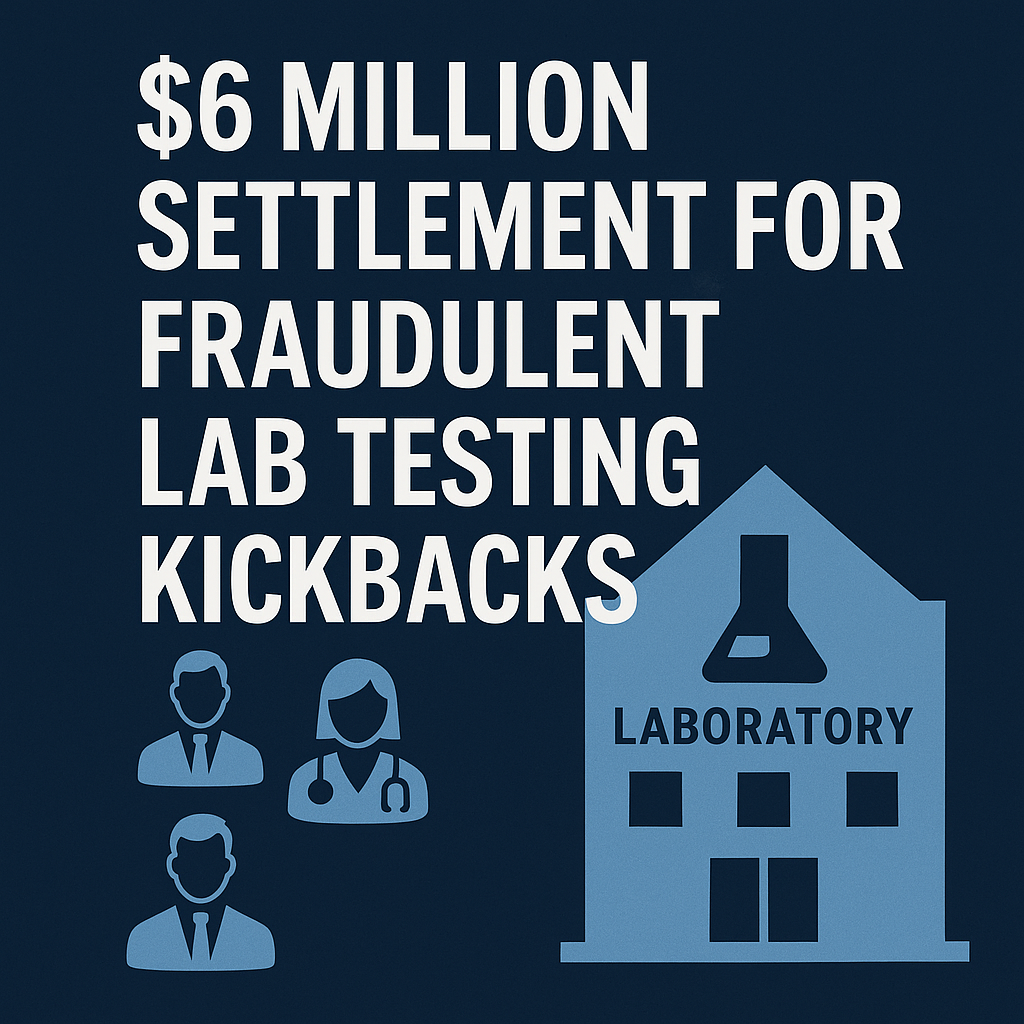
    $6 Million Settlement for Fraudulent Lab Testing Kickbacks

    A former laboratory CEO, two Texas physicians, and seven marketers have agreed to pay more than $6 million. This settlement resolves allegations they took part in kickback schemes. These schemes funneled taxpayer dollars into fraudulent lab testing referrals.

    Christopher Grottenthaler, the former CEO of True Health Diagnostics, will pay $4.25 million to settle claims. He allegedly arranged kickbacks disguised as consulting fees. These included MSO (management service organization) distributions, processing fees, and even waived patient copays. These actions were to induce doctors to order unnecessary lab tests.

    Two physicians, Dr. Hong Davis of Plano and Dr. Elizabeth Seymour of Denton, agreed to pay a combined $358,842. Both were accused of accepting MSO payments to draw business to True Health, Little River Healthcare, and Boston Heart Diagnostics.

    Seven marketers will pay nearly $1.46 million for illegally routing MSO payments to doctors to generate referrals. They are Courtney Love, Stephen Kash, Laura Howard, Jeffrey Parnell, Stanley Jones, Jordan Perkins, and Ruben Marioni.

    These settlements are part of a wider federal crackdown. The Department of Justice has recovered over $59 million. This recovery is from more than 50 doctors and other participants in similar MSO-based lab testing kickback schemes.

    “Kickbacks to doctors can undermine medical decision-making, subject patients to wasteful treatments, and squander taxpayer money,” said Assistant Attorney General Brett A. Shumate.

    This case was sparked by a whistleblower lawsuit filed under the False Claims Act by STF LLC, whose members will receive $148,750. The lawsuit continues against other defendants.

    Why It Matters

    Lab testing is essential for patient care. When executives and doctors put profits ahead of patients, the medical system is corrupted.

    At Find Corporate Waste, we track these schemes to hold bad actors accountable. If you have information about healthcare fraud, waste, or abuse, you can report it confidentially. Reach out to us at info@findcorporatewaste.com.

  • Whistleblower Receives $2.1M for Exposing Customs Fraud

    Whistleblower Receives $2.1M for Exposing Customs Fraud

    Allied Stone Inc., a Dallas-based countertop and cabinetry supplier, and its president Jia “Jerry” Lim, have agreed to pay $12.4 million to resolve allegations that they violated the False Claims Act.

    Allied Stone and Lim avoided millions in customs duties owed between 2018 and 2013. The company allegedly misrepresented Chinese quartz products as other materials. They labeled them as marble or crystallized glass. They did not declare or pay proper duties, undermining fair trade protections designed to shield U.S. manufacturers from unfairly subsidized or underpriced Chinese imports.

    The case was brought to light by relator Melinda Hemphill, who filed under the False Claims Act’s qui tam provisions.

    For her role in exposing the scheme, relator will receive over $2.1 million of the settlement.

    Stacks of U.S. currency bundled and stacked, showcasing wealth.

    This payout underscores the significant financial incentives available to insiders who step forward with information about customs fraud.

    When companies cheat the system, taxpayers lose, trade policy is undermined, and honest U.S. businesses pay the price.

    If you are aware of a company misrepresenting imports, evading tariffs, or defrauding federal programs, you may have a False Claims Act case.

    Acting through Find Corporate Waste, you can file confidentially and still receive your share of any government recovery.

    👉 Contact us today at info@findcorporatewaste.com to protect taxpayer funds and hold fraudsters accountable.

  • Illumina’s $9.8M Cybersecurity Settlement Explained

    Illumina’s $9.8M Cybersecurity Settlement Explained

    Cybersecurity protection is a vital area where the federal government spends billions of dollars to ensure safety. A recent False Claims Act settlement in the District of Rhode Island is a clear example. Companies that fail to meet the standards they claim to uphold risk huge financial penalties.

    Illumina Inc., a leading genomic sequencing company, agreed to pay $9.8 million after the Justice Department alleged it sold systems to federal agencies that had serious cybersecurity vulnerabilities between 2016 and 2023.

    A whistleblower inside the company triggered the case. Erica Lenore, a former Director for Platform Management, received $1.9 million for stepping forward under the False Claims Act.  

    If you work in cybersecurity, IT, compliance, or product management for a company that sells to the federal government, you may have noticed similar failures. These include unpatched vulnerabilities or a lack of essential security testing.

    Under the False Claims Act, neglecting these failures can result in multimillion-dollar liabilities for your employer. It can also lead to multimillion-dollar rewards for you if you take action.

    For professionals concerned about exposure, Find Corporate Waste (FCW) protects whistleblowers who want to remain anonymous. We submit filings through the corporation, not you personally. This ensures maximum confidentiality. It also allows you to receive your fair share of any recovery.  

  • Delta Airlines To Pay $8.1 Million Settlement for Pandemic Relief Fraud

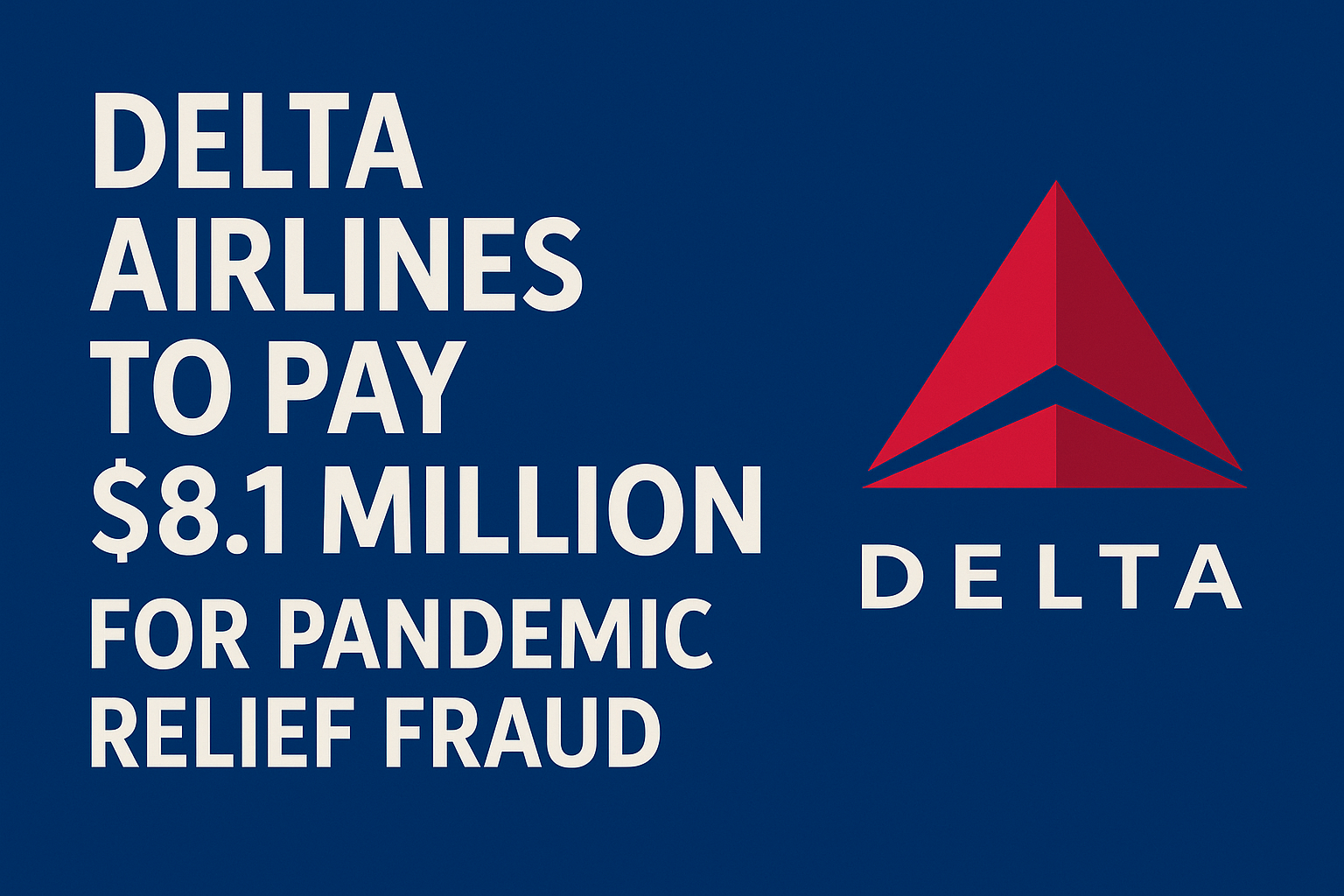
    Delta Airlines To Pay $8.1 Million Settlement for Pandemic Relief Fraud

    Delta Airlines has agreed to pay $8.1 million to resolve allegations that it violated the False Claims Act by breaching executive compensation limits imposed by Congress as a condition for receiving federal COVID-19 relief.

    The relief funds came from the Payroll Support Program (PSP), created under the CARES Act. Between 2020 and 2023, Delta received nearly $11.9 billion, including $8.2 billion in grants that did not require repayment. In exchange, the airline agreed to cap compensation for executives who earned over $425,000 in 2019 until April 2023.

    According to the settlement, Delta broke that agreement by awarding pay packages that exceeded legal thresholds, then falsely certified compliance with the terms of the PSP and failed to alert Treasury of its breach.

    “When companies accept federal assistance, especially generous pandemic-relief funds like those at issue here, they owe a duty to the American people to respect the conditions placed on those funds,” said U.S. Attorney Theodore S. Hertzberg. “We will continue to enforce all available laws to punish the misuse of taxpayers’ money.”

    The case began when a whistleblower—a financial researcher—filed a qui tam lawsuit under the False Claims Act, a law that empowers private citizens to report fraud on the government’s behalf. As part of the resolution, the whistleblower (known legally as the relator) will receive $825,000 plus attorney’s fees.

    The qui tam case, United States ex rel. H. Remidez, LLC v. Delta Airlines, Inc., No. 1:23-CV-1116, was filed in the U.S. District Court for the Northern District of Georgia.

    The settlement was the result of an investigation led by the U.S. Attorney’s Office for the Northern District of Georgia, the DOJ Civil Division’s Commercial Litigation Branch, and the Treasury Department’s Office of Inspector General.

  • Michigan Health Care Provider Ordered to Pay $334,807 to Settle False Claims Act Allegations

    Michigan Health Care Provider Ordered to Pay $334,807 to Settle False Claims Act Allegations

    In the Eastern District of Michigan, M&Y Care, LLC, a Michigan-based home health provider, has agreed to pay $334,807.20 to resolve allegations that it defrauded the Medicare and Medicaid programs by billing for services rendered by unqualified staff.

    According to the Department of Justice, M&Y Care caused the United States Government to be billed for services provided by unqualified staff. Using the incorrect CPT code, G0156, which refers to a home health aide, they defrauded the federal government for services at a reimbursement rate higher than the non-skilled rate to which their employees were entitled.

    The misconduct came to light thanks to a False Claims Act lawsuit filed under the law’s qui tam provisions. The investigation was prompted by a whistleblower complaint under the False Claims Act (FCA), showing the critical role private citizens play in holding corporations accountable for wasting our money.

    At Find Corporate Waste, we applaud this outcome and the whistleblower who made it possible. Every time a company siphons money from Medicare or Medicaid, they are not just defrauding a system—they are stealing from the sick, the elderly, and the taxpayer.

    We are committed to ensuring that fraud like this doesn’t go unanswered.

    If you have information about misconduct involving government programs or contracts, visit our page on how whistleblowers protect public funds. You might be the reason the next $300,000 gets returned to the American people.

    • Utah Men Charged in Alleged $5.5M IRS and SBA COVID-Relief Fraud Scheme

      Federal prosecutors say two Utah men helped run a fictitious payroll scheme that allegedly defrauded the IRS and SBA of more than $5.5 million.

    • Former Intelligence Contractor Pleads Guilty in Kickback Scheme

      A former Intelligence Community contractor admitted taking at least $510,000 in kickbacks tied to government procurement, according to the DOJ.

    • North Carolina Woman Charged in Immigration and VA Disability Fraud Case

      A North Carolina woman was charged with immigration fraud and VA disability fraud after prosecutors alleged a sham marriage was used to obtain immigration benefits and increased federal benefit payments.

    • Circle Medical to Pay $3.325M Over Alleged False Healthcare Claims

      Circle Medical, a San Francisco telehealth company, will pay $3.325 million to resolve allegations that claims identified providers who did not actually provide or supervise the billed services.

    • Ahold Delhaize USA to Pay $40M Over Allegedly Inflated Pharmacy Prices

      Ahold Delhaize USA will pay $40 million to resolve DOJ allegations that its supermarket pharmacies reported inflated “usual and customary” drug prices to Medicare Part D, Medicaid, and TRICARE.

    • Maryland Man Gets 9 Years for EIDL Money Laundering Scheme

      A Maryland man was sentenced to nine years in prison for helping launder fraud proceeds tied to EIDL loans, shell companies, stolen identity documents, and bank accounts opened under false information.

    • Brooklyn Clinic Manager Convicted in $8M Medicare Fraud Scheme

      A New York clinic manager was convicted in an $8 million Medicare fraud scheme built on patient kickbacks and falsified physical therapy records.

    • $56.5M Settlement Targets Medicare Diagnosis Codes Scheme

      Matrix Medical Network, HealthFair, and HealthFair’s founder agreed to pay $56.5 million to resolve False Claims Act allegations over unsupported Medicare Advantage diagnosis codes

    • Contractors to Pay $3.6M Over False Veteran-Owned Small Business Certification

      Two government contractors agreed to pay more than $3.6 million to resolve allegations tied to service-disabled veteran-owned small business set-aside contracts, with the whistleblower set to receive more than $680,000.

    • Louisiana Woman Pleads Guilty in PPP Kickback Scheme

      A Louisiana woman admitted to helping recruit ineligible PPP borrowers, create fake tax forms, and collect kickbacks tied to fraudulent pandemic-relief loans.

  • Whistleblower Rewarded $1.4 Million in YAPP USA Case

    Whistleblower Rewarded $1.4 Million in YAPP USA Case

    YAPP USA Automotive Systems, Inc., a subsidiary ultimately owned by the Chinese government, has agreed to pay $14,208,496 to the United States. This agreement settles allegations that it improperly obtained and retained a Paycheck Protection Program (PPP) loan. These actions were in violation of the False Claims Act.

    The case was brought to light through a qui tam lawsuit filed under the False Claims Act by GNGH2 Inc., a private entity acting in the public interest.

    The whistleblower will receive $1,420,849 as a reward for its role in exposing the misconduct.

    Stacks of U.S. currency bundles, each secured with rubber bands, arranged neatly in a large pile.

    Find Corporate Waste is dedicated to recovering taxpayer money. These funds were given to foreign owned businesses. This occurred while Americans struggled to make ends meet during the pandemic.

    If you have information relating to potential False Claims Act violations, we are here to help you file your complaint. We aim to restore trust and accountability to the American procurement system.

  • How States Game the System: Medicaid Fraud and the FMAP Loophole

    Medicaid was originally created as a partnership between the federal government and individual states. The concept was simple: every time a state spends a dollar, the federal government matches a portion of that investment.

    This is known as the Federal Medical Assistance Percentage (FMAP).

    Over time, some states discovered a way to manipulate the system by shifting the burden entirely to the federal government while padding their own budgets.

    How Medicaid Fraud Works

    1. The state taxes hospitals or nursing homes.
    2. The state pays this tax back to the provider as Medicaid reimbursements.
    3. The federal government matches a percentage of the returned funds through FMAP.
    4. The provider gets their money + the FMAP.
    5. The state contributes nothing, while the federal government is on the hook.

    Why It All Adds Up to a Big Problem

    This fraud is one of the major factors contributing to the systemic weakness of our entire healthcare system.

    When states are allowed to run these schemes, Medicaid becomes more expensive, draining money away from the people who actually need help.

    Instead of creating a safety net, the system becomes a slush fund for state coffers—and the federal government (read: taxpayers) gets stuck with the tab.

    At Find Corporate Waste, we dig deep into these kinds of backdoor deals because we believe in a system that’s honest, accountable, and actually works for the people it’s supposed to serve. Not one that lets bureaucrats and politically connected hospitals game the rules for a payday.

    But here’s the thing—we can’t do it alone.

    If you’ve seen this kind of scheme from the inside—maybe you work in healthcare, government, or finance—you might be sitting on information that could make a real difference. Thanks to the False Claims Act, whistleblowers who step forward not only help protect public fundsthey may also be eligible for a financial reward if the government recovers money based on their tip.

    ← Back

    Thank you for your response. ✨

  • Swiss-Owned Company Pays $2.3M to Settle PPP Fraud Case Triggered by Whistleblower

    In a decisive action against pandemic relief fraud, Zund America, Inc., based in Oak Creek, Wisconsin, has agreed to pay $2.3 million to resolve allegations it falsely certified eligibility for a federal Paycheck Protection Program (PPP) loan. The investigation was prompted by a whistleblower complaint under the False Claims Act (FCA), once again affirming the critical role private citizens play in holding corporations accountable.

    In February 2021, Zund America received a second-draw PPP loan—a type of loan restricted to businesses with 300 or fewer employees, including their affiliates. However, Zund America is owned by Zund Holding AG, a Swiss parent company with a global network of 19 affiliated entities, collectively employing well over that limit.

    Despite these clear affiliations, Zund America certified its eligibility and received taxpayer-backed funds. The Small Business Administration (SBA) later repaid the loan, effectively passing the cost to American taxpayers.

    This case might have gone unnoticed if not for a qui tam complaint filed under the False Claims Act by GNGH 2, Inc., a whistleblower entity. Qui tam provisions allow private parties to sue on behalf of the U.S. government and receive a portion of the recovery. As a result of the whistleblower’s tip, the government recovered the full loan amount plus penalties.

    The case, filed as United States ex rel. GNGH 2, Inc. v. Zund America, Inc. (No. 24-cv-0661), was prosecuted in the Eastern District of Wisconsin, with Assistant U.S. Attorney Michael Carter representing the government.

    At Find Corporate Waste, we shine a light where others look away—because every stolen dollar is a theft from the American people, and we’re here to take it back.