Tag: Whistleblower

  • Illumina’s $9.8M Cybersecurity Settlement Explained

    Illumina’s $9.8M Cybersecurity Settlement Explained

    Cybersecurity protection is a vital area where the federal government spends billions of dollars to ensure safety. A recent False Claims Act settlement in the District of Rhode Island is a clear example. Companies that fail to meet the standards they claim to uphold risk huge financial penalties.

    Illumina Inc., a leading genomic sequencing company, agreed to pay $9.8 million after the Justice Department alleged it sold systems to federal agencies that had serious cybersecurity vulnerabilities between 2016 and 2023.

    A whistleblower inside the company triggered the case. Erica Lenore, a former Director for Platform Management, received $1.9 million for stepping forward under the False Claims Act.  

    If you work in cybersecurity, IT, compliance, or product management for a company that sells to the federal government, you may have noticed similar failures. These include unpatched vulnerabilities or a lack of essential security testing.

    Under the False Claims Act, neglecting these failures can result in multimillion-dollar liabilities for your employer. It can also lead to multimillion-dollar rewards for you if you take action.

    For professionals concerned about exposure, Find Corporate Waste (FCW) protects whistleblowers who want to remain anonymous. We submit filings through the corporation, not you personally. This ensures maximum confidentiality. It also allows you to receive your fair share of any recovery.  

  • Delta Airlines To Pay $8.1 Million Settlement for Pandemic Relief Fraud

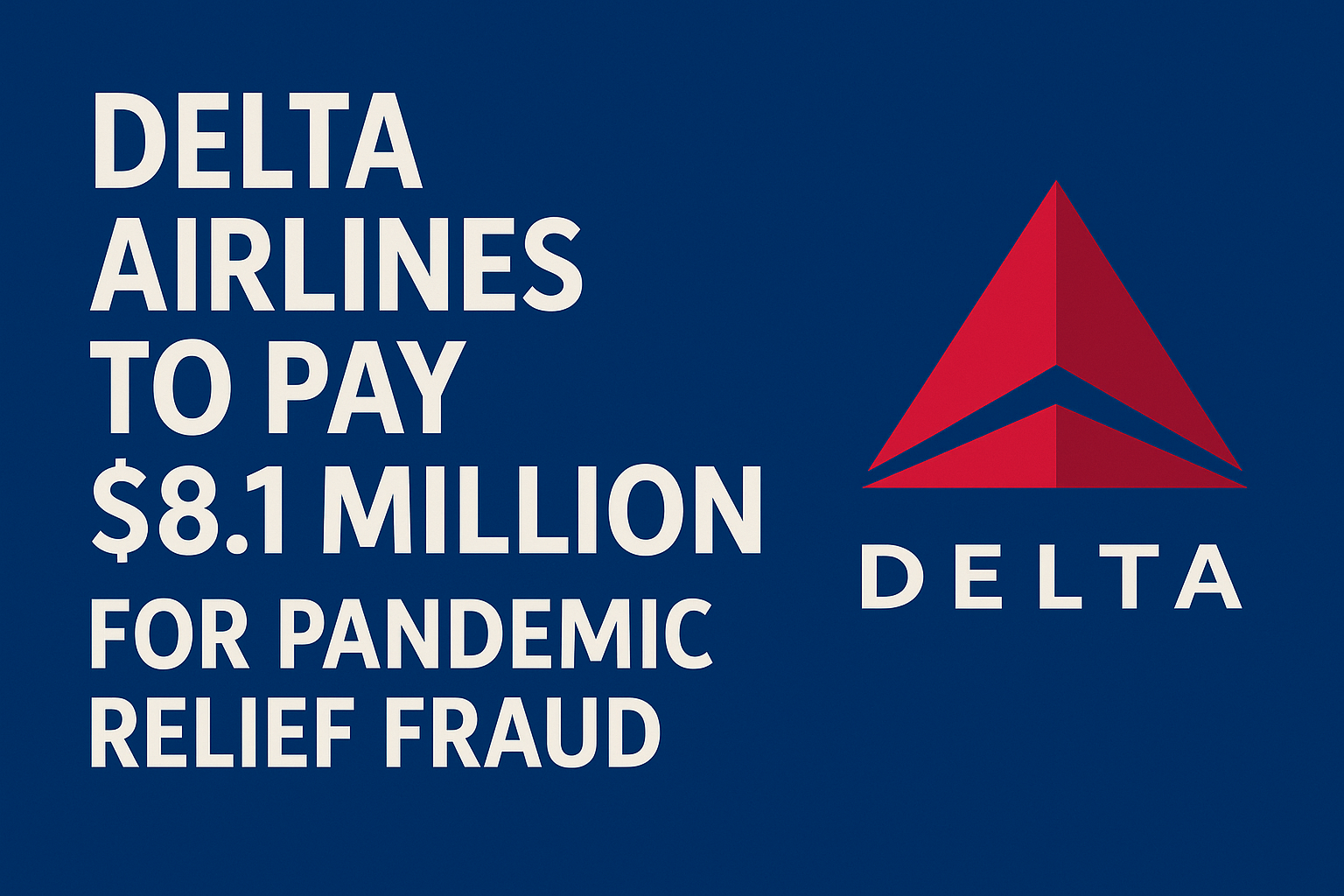
    Delta Airlines To Pay $8.1 Million Settlement for Pandemic Relief Fraud

    Delta Airlines has agreed to pay $8.1 million to resolve allegations that it violated the False Claims Act by breaching executive compensation limits imposed by Congress as a condition for receiving federal COVID-19 relief.

    The relief funds came from the Payroll Support Program (PSP), created under the CARES Act. Between 2020 and 2023, Delta received nearly $11.9 billion, including $8.2 billion in grants that did not require repayment. In exchange, the airline agreed to cap compensation for executives who earned over $425,000 in 2019 until April 2023.

    According to the settlement, Delta broke that agreement by awarding pay packages that exceeded legal thresholds, then falsely certified compliance with the terms of the PSP and failed to alert Treasury of its breach.

    “When companies accept federal assistance, especially generous pandemic-relief funds like those at issue here, they owe a duty to the American people to respect the conditions placed on those funds,” said U.S. Attorney Theodore S. Hertzberg. “We will continue to enforce all available laws to punish the misuse of taxpayers’ money.”

    The case began when a whistleblower—a financial researcher—filed a qui tam lawsuit under the False Claims Act, a law that empowers private citizens to report fraud on the government’s behalf. As part of the resolution, the whistleblower (known legally as the relator) will receive $825,000 plus attorney’s fees.

    The qui tam case, United States ex rel. H. Remidez, LLC v. Delta Airlines, Inc., No. 1:23-CV-1116, was filed in the U.S. District Court for the Northern District of Georgia.

    The settlement was the result of an investigation led by the U.S. Attorney’s Office for the Northern District of Georgia, the DOJ Civil Division’s Commercial Litigation Branch, and the Treasury Department’s Office of Inspector General.

  • Michigan Health Care Provider Ordered to Pay $334,807 to Settle False Claims Act Allegations

    Michigan Health Care Provider Ordered to Pay $334,807 to Settle False Claims Act Allegations

    In the Eastern District of Michigan, M&Y Care, LLC, a Michigan-based home health provider, has agreed to pay $334,807.20 to resolve allegations that it defrauded the Medicare and Medicaid programs by billing for services rendered by unqualified staff.

    According to the Department of Justice, M&Y Care caused the United States Government to be billed for services provided by unqualified staff. Using the incorrect CPT code, G0156, which refers to a home health aide, they defrauded the federal government for services at a reimbursement rate higher than the non-skilled rate to which their employees were entitled.

    The misconduct came to light thanks to a False Claims Act lawsuit filed under the law’s qui tam provisions. The investigation was prompted by a whistleblower complaint under the False Claims Act (FCA), showing the critical role private citizens play in holding corporations accountable for wasting our money.

    At Find Corporate Waste, we applaud this outcome and the whistleblower who made it possible. Every time a company siphons money from Medicare or Medicaid, they are not just defrauding a system—they are stealing from the sick, the elderly, and the taxpayer.

    We are committed to ensuring that fraud like this doesn’t go unanswered.

    If you have information about misconduct involving government programs or contracts, visit our page on how whistleblowers protect public funds. You might be the reason the next $300,000 gets returned to the American people.

    • Contractors to Pay $3.6M Over False Veteran-Owned Small Business Certification

      Two government contractors agreed to pay more than $3.6 million to resolve allegations tied to service-disabled veteran-owned small business set-aside contracts, with the whistleblower set to receive more than $680,000.

    • Louisiana Woman Pleads Guilty in PPP Kickback Scheme

      A Louisiana woman admitted to helping recruit ineligible PPP borrowers, create fake tax forms, and collect kickbacks tied to fraudulent pandemic-relief loans.

    • Colombian Woman Sentenced After Stolen Identity Scheme Tied to Voter Fraud and $404K in Benefits

      Colombian national sentenced after prosecutors say a stolen identity was used for voter fraud, federal benefits, Massachusetts IDs, and a passport application.

    • Hawaii Housing Official Sentenced In $11M Affordable Housing Bribery Scheme

      A former Hawaii County housing official received 46 months in prison after the DOJ said affordable housing agreements worth more than $11 million produced no housing units and nearly $1.93 million in bribes and kickbacks.

    • Delco Woman Pleads Guilty in $7.17M EIDL Fraud-Proceeds Laundering Scheme

      Pennsylvania woman pleads guilty in $7.17M laundering conspiracy tied to fraudulent EIDL proceeds, business email compromise funds, and sham company accounts.

    • Oglethorpe Pays $32M Over Medicare Overpayment Allegations

      Oglethorpe and top executives agreed to pay $32 million over Medicare overpayment allegations tied to psychiatric hospital admissions.

    • Georgia Man Gets 37 Months in $441K COVID Relief Fraud Case

      Brian Graham was sentenced to 37 months and ordered to pay more than $441,000 after prosecutors said he used false PPP and EIDL applications for personal benefit.

    • Brooklyn Clinic Owner Convicted in $52M Health Care Fraud and Kickback Scheme

      Brooklyn clinic owner Tony Brown-Arkah was convicted in a $52 million Medicare and Medicaid fraud scheme involving Suboxone diversion, kickbacks, and false billing.

    • VSoft to Pay Nearly $2.3M Over PPP Eligibility Allegations

      VSoft will pay nearly $2.3 million to resolve DOJ allegations that it improperly obtained a second-draw PPP loan by misrepresenting its employee count.

    • Regions Bank to Pay $4.9M Over Ineligible PPP Forgiveness Approval

      Regions Bank will pay $4.9 million after the DOJ alleged it approved forgiveness for a PPP loan that was not eligible.

  • DOJ-HHS Launch New Initiative to Combat Healthcare Fraud

    DOJ-HHS Launch New Initiative to Combat Healthcare Fraud

    July 2, 2025

    Washington, D.C.


    In a decisive move to enhance the fight against healthcare fraud, the U.S. Department of Justice (DOJ) and the Department of Health and Human Services (HHS) have taken significant action. They have launched the DOJ-HHS False Claims Act Working Group.

    This strategic alliance formalizes long-standing cooperation between the two agencies.

    It also shows how the False Claims Act (FCA) is used. This law protects federal healthcare programs from fraud, waste, and abuse.

    The Working Group will concentrate enforcement in seven key areas:

    • Medicare Advantage fraud, such as upcoding and inflated risk scores
    • Drug and device pricing manipulation, such as undisclosed rebates and improper discount arrangements
    • Access to care violations, including non-compliant provider networks
    • Kickback schemes, involving drugs, medical devices, and durable medical equipment
    • Defective medical devices that compromise patient safety
    • Electronic Health Records abuse, such as system manipulation to boost Medicare billing
    • Data-driven investigations, powered by cross-agency analytics and audit findings

    The new Working Group encourages whistleblowers to report false claims involving federal healthcare dollars related to specific enforcement priorities.

    At Find Corporate Waste, we spotlight whistleblower-driven accountability.

    If you become a relator under the False Claims Act, your role would expose fraud and recover taxpayer dollars.

    Becoming a relator is a serious decision.

    If you have inside information on healthcare contracts or schemes, we’re here to assist you.

  • Whistleblower Rewarded $1.4 Million in YAPP USA Case

    Whistleblower Rewarded $1.4 Million in YAPP USA Case

    YAPP USA Automotive Systems, Inc., a subsidiary ultimately owned by the Chinese government, has agreed to pay $14,208,496 to the United States. This agreement settles allegations that it improperly obtained and retained a Paycheck Protection Program (PPP) loan. These actions were in violation of the False Claims Act.

    The case was brought to light through a qui tam lawsuit filed under the False Claims Act by GNGH2 Inc., a private entity acting in the public interest.

    The whistleblower will receive $1,420,849 as a reward for its role in exposing the misconduct.

    Stacks of U.S. currency bundles, each secured with rubber bands, arranged neatly in a large pile.

    Find Corporate Waste is dedicated to recovering taxpayer money. These funds were given to foreign owned businesses. This occurred while Americans struggled to make ends meet during the pandemic.

    If you have information relating to potential False Claims Act violations, we are here to help you file your complaint. We aim to restore trust and accountability to the American procurement system.

  • How States Game the System: Medicaid Fraud and the FMAP Loophole

    Medicaid was originally created as a partnership between the federal government and individual states. The concept was simple: every time a state spends a dollar, the federal government matches a portion of that investment.

    This is known as the Federal Medical Assistance Percentage (FMAP).

    Over time, some states discovered a way to manipulate the system by shifting the burden entirely to the federal government while padding their own budgets.

    How Medicaid Fraud Works

    1. The state taxes hospitals or nursing homes.
    2. The state pays this tax back to the provider as Medicaid reimbursements.
    3. The federal government matches a percentage of the returned funds through FMAP.
    4. The provider gets their money + the FMAP.
    5. The state contributes nothing, while the federal government is on the hook.

    Why It All Adds Up to a Big Problem

    This fraud is one of the major factors contributing to the systemic weakness of our entire healthcare system.

    When states are allowed to run these schemes, Medicaid becomes more expensive, draining money away from the people who actually need help.

    Instead of creating a safety net, the system becomes a slush fund for state coffers—and the federal government (read: taxpayers) gets stuck with the tab.

    At Find Corporate Waste, we dig deep into these kinds of backdoor deals because we believe in a system that’s honest, accountable, and actually works for the people it’s supposed to serve. Not one that lets bureaucrats and politically connected hospitals game the rules for a payday.

    But here’s the thing—we can’t do it alone.

    If you’ve seen this kind of scheme from the inside—maybe you work in healthcare, government, or finance—you might be sitting on information that could make a real difference. Thanks to the False Claims Act, whistleblowers who step forward not only help protect public fundsthey may also be eligible for a financial reward if the government recovers money based on their tip.

    ← Back

    Thank you for your response. ✨

  • Swiss-Owned Company Pays $2.3M to Settle PPP Fraud Case Triggered by Whistleblower

    In a decisive action against pandemic relief fraud, Zund America, Inc., based in Oak Creek, Wisconsin, has agreed to pay $2.3 million to resolve allegations it falsely certified eligibility for a federal Paycheck Protection Program (PPP) loan. The investigation was prompted by a whistleblower complaint under the False Claims Act (FCA), once again affirming the critical role private citizens play in holding corporations accountable.

    In February 2021, Zund America received a second-draw PPP loan—a type of loan restricted to businesses with 300 or fewer employees, including their affiliates. However, Zund America is owned by Zund Holding AG, a Swiss parent company with a global network of 19 affiliated entities, collectively employing well over that limit.

    Despite these clear affiliations, Zund America certified its eligibility and received taxpayer-backed funds. The Small Business Administration (SBA) later repaid the loan, effectively passing the cost to American taxpayers.

    This case might have gone unnoticed if not for a qui tam complaint filed under the False Claims Act by GNGH 2, Inc., a whistleblower entity. Qui tam provisions allow private parties to sue on behalf of the U.S. government and receive a portion of the recovery. As a result of the whistleblower’s tip, the government recovered the full loan amount plus penalties.

    The case, filed as United States ex rel. GNGH 2, Inc. v. Zund America, Inc. (No. 24-cv-0661), was prosecuted in the Eastern District of Wisconsin, with Assistant U.S. Attorney Michael Carter representing the government.

    At Find Corporate Waste, we shine a light where others look away—because every stolen dollar is a theft from the American people, and we’re here to take it back.

  • Lockheed Martin Pays $70 Million to Settle False Claims Allegations Over Defective Pricing in Missile Contracts

    In a significant enforcement action announced by the U.S. Department of Justice, Lockheed Martin Corporation has agreed to pay $70 million to resolve allegations that it violated the False Claims Act (FCA) by submitting defectively priced contracts for missile sales to the Department of Defense.

    Click For Details

    The case centers on the Terminal High Altitude Area Defense (THAAD) system, a key component of U.S. missile defense architecture. DOJ officials alleged that Lockheed Martin’s subcontractor, L3Harris Technologies, intentionally provided inaccurate cost data during negotiations, which Lockheed Martin then passed on to the government without adequate disclosure or correction. As a result, the U.S. Army Missile Command allegedly awarded contracts based on inflated cost and pricing data, causing the government to overpay for missile components.

    This case was brought to light by a private whistleblower, known legally as a relator, who filed a lawsuit under the qui tam provisions of the False Claims Act. These provisions empower private citizens to sue on behalf of the federal government when they possess non-public evidence of fraud involving taxpayer dollars.

    In return, whistleblowers may be eligible to receive a portion of the recovery. In this case, the relator will receive $13.7 million from the settlement—a recognition of the role that private citizens can play in holding large corporations accountable.

    At Find Corporate Waste, we believe that the integrity of public spending starts with accountability. This case against Lockheed Martin highlights how whistleblowers can protect taxpayer dollars and expose fraudulent schemes that would otherwise go unchecked. We are committed to supporting those who step forward, guiding them through the complex landscape of False Claims Act litigation, and ensuring their efforts lead to meaningful recovery for the American people. If you have information about fraud, waste, or abuse of government funds, Find Corporate Waste is here to help you take the first step.

  • Whistleblower Action Exposes Corporate Waste and Tariff Evasion in $8.1 Million FCA Settlement

    In a recent settlement announced by the U.S. Department of Justice, a California-based flooring company agreed to pay $8.1 million to resolve allegations of customs fraud—thanks to the actions of a whistleblower acting under the False Claims Act’s qui tam provision.

    Evolutions Flooring Inc., along with its owners Richard and Brian Abcarian, was accused of evading U.S. import duties by falsely labeling Chinese-manufactured flooring products as originating from Malaysia. Between 2011 and 2019, the company allegedly used this scheme to circumvent anti-dumping and countervailing duties imposed on multilayered wood flooring from China.

    Under federal trade laws, importers must truthfully declare the country of origin for all goods entering the United States. The government alleged that Evolutions Flooring submitted false documentation to U.S. Customs and Border Protection, routing shipments through Malaysia to avoid tariffs—triggering False Claims Act liability.

    This case was brought to light not by routine customs enforcement—but by a private individual known legally as a relator. Under the qui tam provision of the False Claims Act, private citizens with knowledge of fraud against the federal government may file lawsuits on its behalf. If the case leads to a financial recovery, the whistleblower may receive a share of the settlement.

    The False Claims Act remains a vital tool for preventing fraud — not only in healthcare and government contracting, but increasingly in the international trade sector. As global supply chains expand and duty circumvention schemes grow more complex, whistleblowers will remain an essential source of investigative leads for enforcement.

  • Whistleblower Action Uncovers Medicare Billing Fraud in Lehigh Valley

    In a recent settlement announced by the U.S. Attorney’s Office for the Eastern District of Pennsylvania, a Lehigh Valley-based doctor agreed to pay $45,000 to resolve allegations of healthcare fraud—thanks to the actions of a whistleblower acting under the False Claims Act’s qui tam provision.

    Dr. Stephen Renn of Bethlehem was accused of submitting claims to Medicare and Medicaid for psychotherapy services without the required supporting documentation between 2016 and 2020. Under federal rules, physicians must maintain detailed records to justify billing levels. The government alleged that Dr. Renn failed to do so, triggering False Claims Act liability.

    This case was brought to light not by internal audits or regulators—but by a private individual known legally as a relator.

    Under the qui tam provision of the False Claims Act, private citizens with evidence of fraud against federal programs can file lawsuits on behalf of the U.S. government. If the case results in a financial recovery, the whistleblower may receive a portion of the settlement.

    Although the relator remains anonymous, their role was essential. Without their initiative, this case—and the associated improper billing practices—may never have been uncovered.

    The settlement, while not an admission of guilt, underscores the growing importance of whistleblowers in protecting taxpayer dollars and ensuring healthcare compliance. It also serves as a warning to other providers: inadequate documentation can lead to legal and financial consequences.

    This case is another example of how the False Claims Act continues to serve as a powerful tool for fraud prevention, especially in the healthcare sector. With billions of dollars flowing through programs like Medicare and Medicaid, the government relies heavily on individuals to report wrongdoing.

    As healthcare spending continues to rise, so does the potential for abuse. But as this case proves, one person—armed with information and the courage to act—can help ensure accountability and recover public funds.

    FCW remains committed to exposing similar patterns of fraud nationwide—ensuring that every taxpayer dollar is accounted for and every violation brought to light.