Tag: CMS

  • Pennsylvania Medical Supplier Billed $1.3B in Five Months, DOJ Says

    Pennsylvania Medical Supplier Billed $1.3B in Five Months, DOJ Says

    A Pennsylvania medical supplier allegedly submitted $1.3 billion in fraudulent health care claims during a five-month period, according to the Department of Justice⁠.

    Federal prosecutors charged Erekle Gugava, 33, a Georgian national, with conspiring to launder proceeds from the alleged scheme.

    Gugava purportedly owned ND Medical Solutions LLC from February through July 2025. During that period, the durable medical equipment company allegedly billed Medicare, supplemental insurers, employer-sponsored plans and other insurers for equipment that patients never received.

    Insurers paid ND Medical approximately $6.5 million.

    Prosecutors allege the claims relied partly on stolen identities belonging to elderly and disabled Americans. Many beneficiaries reportedly contacted Medicare and its contractors after receiving benefit statements listing equipment they had never requested, doctors they had never visited and a supplier they did not recognize.

    Gugava allegedly opened several ND Medical bank accounts, deposited insurance payments and helped transfer the proceeds to overseas accounts benefiting a transnational criminal organization based in Russia and elsewhere.
  • SSM Health Pays Nearly $1M After Pharmacy Copay Waiver Allegations

    SSM Health Pays Nearly $1M After Pharmacy Copay Waiver Allegations

    This case is an example of how the Trump Administration’s Department of Justice is clawing back billions of taxpayer dollars from fraud schemes throughout the country.

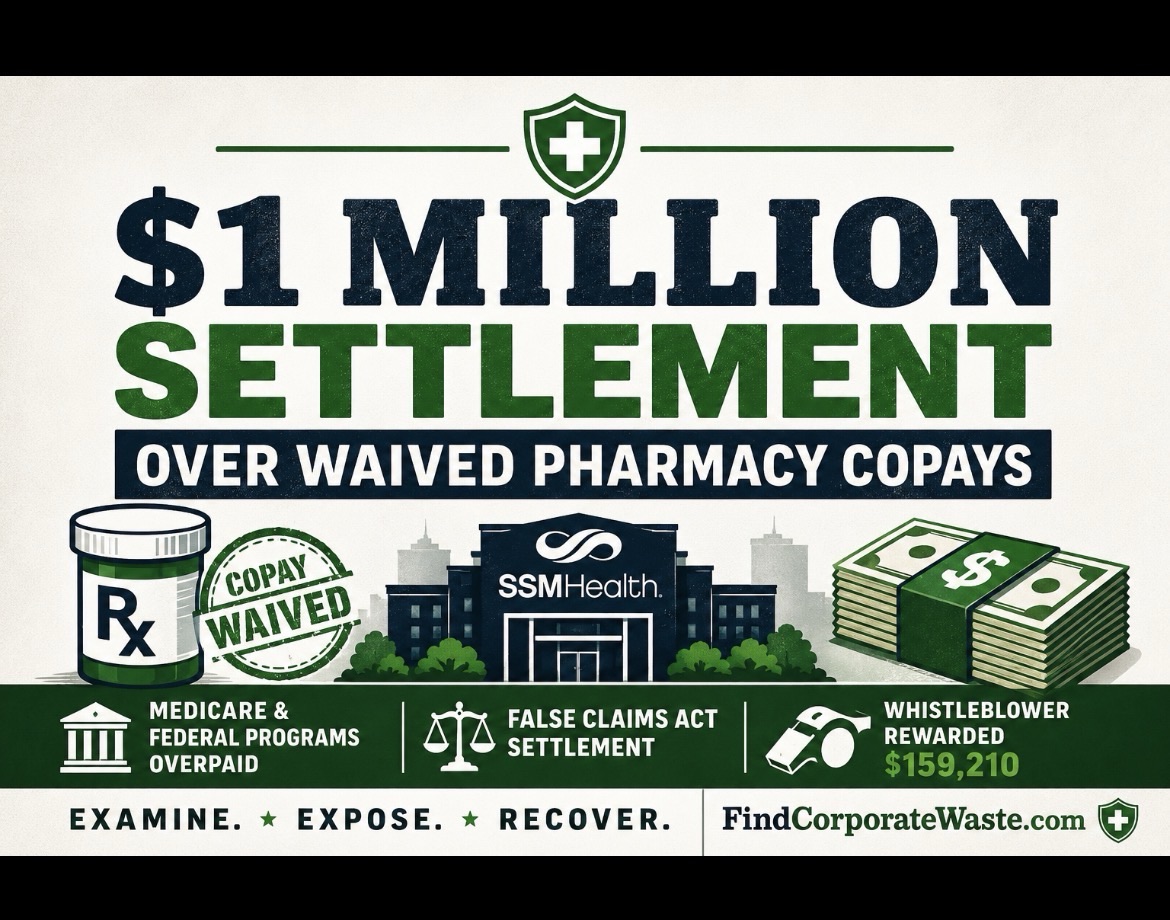
    The United States has reached a $939,290 civil settlement⁠ with SSM Health Care over allegations that the retail pharmacy at Saint Louis University Hospital routinely waived patient copays, causing Medicare and the Federal Employees Health Benefits Program to overpay for prescriptions.  

    DOJ says the conduct ran from September 2020 through February 2023, with pharmacy employees allegedly waiving or failing to collect copays. That is not a harmless discount. Routine copay waivers can steer patients to one pharmacy, hide the real prescription cost, and inflate what federal programs pay.

    The case began with a qui tam whistleblower suit filed under the False Claims Act. The whistleblower will receive $159,210, while SSM will also pay $150,000 in fees and costs. SSM did not admit liability and DOJ credited the company’s cooperation and remedial action.  

    For FCW, the takeaway is direct: when providers manipulate the economics behind federally reimbursed claims, the taxpayer is left holding the bill. Copays are not paperwork. They are part of the program-integrity firewall.

  • DOJ’s $6.5B Health Care Fraud Takedown Shows Why FOCUS Matters

    DOJ’s $6.5B Health Care Fraud Takedown Shows Why FOCUS Matters

    The Department of Justice announced⁠ a national health care fraud takedown charging 455 defendants, including 90 licensed medical professionals, in alleged schemes exceeding $6.5 billion.

    The DOJ credited analytics with identifying suspicious billing patterns, including alleged wound-care schemes, hospice fraud, opioid diversion, Medicaid billing fraud, kickbacks, and claims for services that were medically unnecessary, never provided, or billed while patients were hospitalized elsewhere.

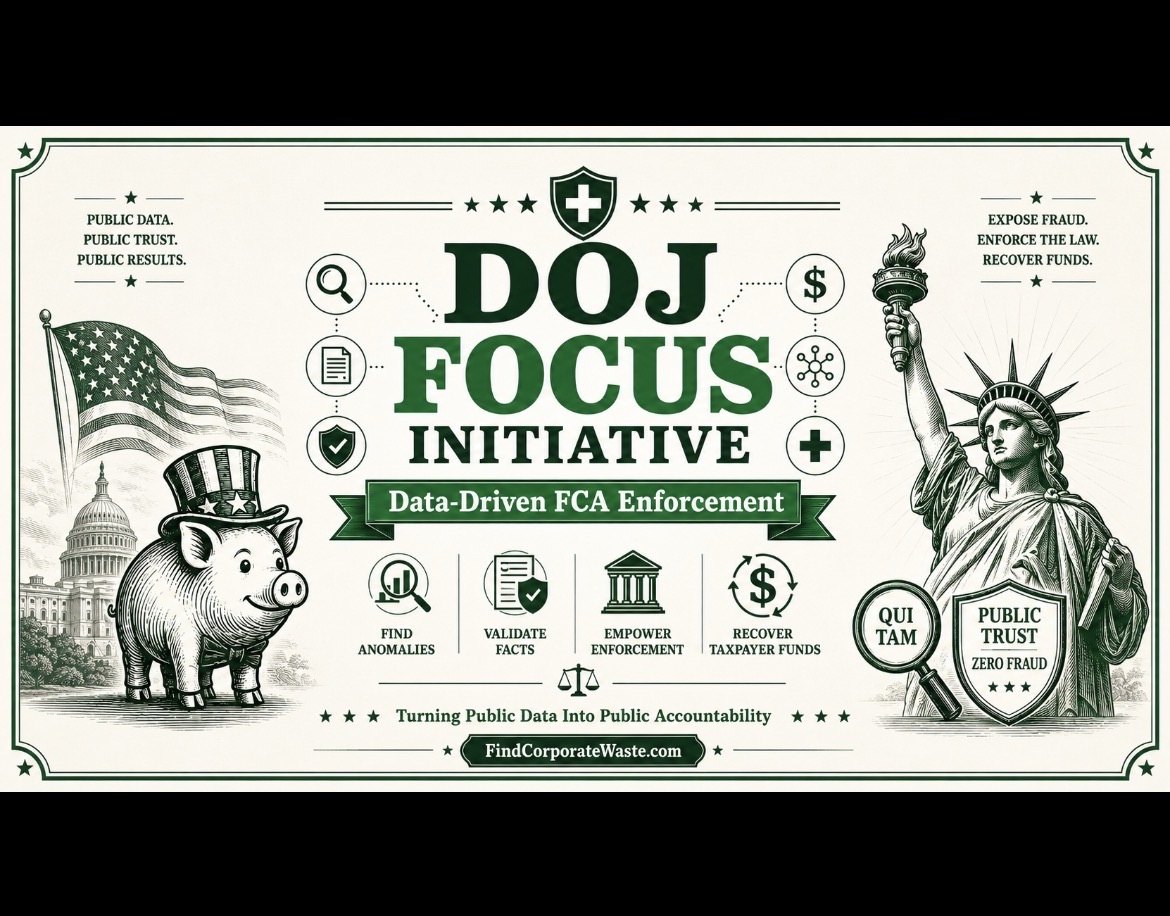
    That is exactly where DOJ’s FOCUS Initiative⁠ must be tied in. FOCUS was designed to prioritize high-quality qui tam actions from data miners who apply public government data to regulatory frameworks in ways that identify fraud otherwise likely to go undetected.

    This takedown proves the model. Public data is not proof of fraud, but it can expose patterns requiring verification: abnormal billing spikes, excluded providers receiving federal funds, Medicaid providers with impossible utilization, related entities moving across programs, and relief recipients whose certifications deserve review.

    For Find Corporate Waste, the connection is direct. Pandemic-era programs such as the Provider Relief Fund⁠ required recipients to satisfy eligibility terms, including restrictions tied to exclusion from federal health care programs.

    Operation Clawback applies that same principle in FCW’s relator activities: comparing relief-payment data against exclusion, billing, ownership, and enforcement records, then referring those documented anomalies for recovery review.

    FOCUS must not be siloed off from health care enforcement. It should become a valuable intake lane for disciplined, sourced, public-record leads that help DOJ, HHS-OIG, CMS, and Medicaid Fraud Control Units examine, expose, and recover taxpayer funds.