Tag: CARES ACT

  • Georgia Man Gets 37 Months in $441K COVID Relief Fraud Case

    Georgia Man Gets 37 Months in $441K COVID Relief Fraud Case

    Brian Graham, 49, of Lithia Springs, Georgia, was sentenced to 37 months in federal prison after pleading guilty to wire fraud in a COVID-relief scheme involving the PPP and EIDL programs.

    According to the U.S. Attorney’s Office for the District of Colorado, Graham prepared and submitted fraudulent loan applications between April 2020 and August 2021 for several business entities he controlled. Prosecutors said the applications misstated employee counts, gross revenues, cost of goods sold, and payroll.

    The court ordered Graham to pay $441,546 in restitution, serve three years of supervised release, and forfeit proceeds tied to the offense. The SBA also highlighted the sentence.

    The critical allegation was not just bad paperwork. Graham certified that the information was accurate and that the funds would be used for payroll and other approved business expenses. Prosecutors said he instead used the bulk of the money for himself.

    The case, United States v. Graham, 1:25-cr-00079-JLK, was investigated by TIGTA and the SBA Office of Inspector General.

    Brian Graham allegedly used his role as a notary to defraud the American taxpayer.

    For Find Corporate Waste, the Graham case is a reminder that pandemic fraud often hides in plain sight: controlled entities, inflated numbers, false certifications, and taxpayer-backed money converted into personal gain.

  • California Medical Company Owner Pleads Guilty to Stealing More Than $1M in Pandemic Relief Funds

    California Medical Company Owner Pleads Guilty to Stealing More Than $1M in Pandemic Relief Funds

    A California medical business owner has pleaded guilty to stealing more than $1 million from federal pandemic relief programs.

    According to the DOJ, Mehrdad Tabrizi owned Life Fleet Inc. and Resonante Group, two Orange County medical businesses. During the COVID-19 pandemic, he used those companies to submit fraudulent applications for Paycheck Protection Program and Economic Injury Disaster Loan funds.  

    The DOJ said Tabrizi falsely claimed Life Fleet was operating and had employees who received wages in 2019 and 2020. In reality, the company had been shuttered in 2018 and was no longer operational. Those false PPP applications caused approximately $696,565 to be disbursed into bank accounts he controlled.  

    Tabrizi also submitted fraudulent EIDL applications claiming Life Fleet and Resonante Group had revenue and business expenses before January 2020. Those applications brought in another $319,800, even though neither company was entitled to the money. The DOJ also said he withdrew $60,000 of the fraud proceeds to help buy a 2019 Porsche Turbo Cabriolet.  

    He pleaded guilty to four counts of wire fraud and one count of money laundering. Sentencing is scheduled for September 28, 2026.

    For Find Corporate Waste, this case shows why pandemic relief fraud remains a major public-accountability issue. Relief programs moved quickly, but speed created opportunities for false certifications, inactive companies, inflated payroll claims, and misuse of taxpayer funds. FCW will continue tracking pandemic relief cases, False Claims Act recoveries, and public-record signals that expose waste, fraud, and abuse.

  • DOJ’s Fraud Reorganization Could Shape the Next Wave of FCA Enforcement

    DOJ’s Fraud Reorganization Could Shape the Next Wave of FCA Enforcement

    The Justice Department’s latest COVID-relief fraud case shows where federal enforcement is heading.

    In California, tax preparer Kerwin Aldric Jordan pleaded guilty after DOJ said he helped file false tax returns and fraudulently obtained pandemic relief loans. Prosecutors said the conduct caused more than $25 million in tax losses and involved false claims for PPP and EIDL funds. DOJ Press Release  

    DOJ Is Moving Toward Centralized Fraud Enforcement

    This DOJ is no longer treating pandemic fraud as a series of disconnected prosecutions.

    The Department is increasingly framing these cases as part of a broader effort to identify fraud, recover taxpayer money, and hold applicants accountable when federal funds were obtained through false statements or false certifications.

    That matters for the False Claims Act.

    The FCA remains one of the government’s strongest tools for recovering money obtained from the United States through false claims. DOJ reported that FCA settlements and judgments exceeded $2.9 billion in fiscal year 2024, with fraud in pandemic relief programs listed among the Department’s enforcement priorities.  

    What This Means for Future FCA Cases

    COVID-relief programs created a massive paper trail.

    Applicants made certifications, which claimed eligibility. They submitted business records, tax information, provider data, and other representations to the government.

    Now the DOJ can compare those claims against public records, exclusion lists, agency databases, tax filings, payroll records, and later-discovered facts.

    That is the future enforcement model: follow the money, test the certification, and recover funds where the record does not match the claim.

    Why Operation Clawback Fits This Model

    This is exactly the logic behind Operation Clawback.

    Operation Clawback focuses on pandemic-era healthcare relief recipients, including Provider Relief Fund recipients, whose eligibility may not match the public record. One key issue is whether providers excluded from Medicare, Medicaid, or other federal healthcare programs received relief funds despite being barred from participation.  

    The California case is not a Provider Relief Fund case. It involves tax fraud, PPP loans, and EIDL loans.

    But the principle is the same: when federal money was paid based on false information, the government can come back years later.

    FCW Bottom Line

    DOJ’s reorganization points toward a more data-driven future for FCA enforcement.

    Not every suspicious loan is fraud. Not every mismatch proves a case. But when the documents show that federal money was received through false eligibility claims, false certifications, or hidden disqualifying facts, the False Claims Act gives the government a path to recover that money.

    Find Corporate Waste is tracking these cases because taxpayers deserve to know where pandemic relief money went, who was eligible to receive it, and whether public funds can still be clawed back when the rules were broken.

  • FCW Welcomes DOJ FOCUS Initiative to Combat Waste, Fraud, and Abuse With Data Science

    FCW Welcomes DOJ FOCUS Initiative to Combat Waste, Fraud, and Abuse With Data Science

    The Department of Justice’s Civil Division has announced the new FOCUS initiative, short for Fraud Oversight through Careful Use of Statistics. The initiative is aimed at data miners who use public government records to identify potential False Claims Act cases. Find Corporate Waste has developed a sophisticated methodology for addressing Medicare Fraud committed during the COVID-19 Pandemic.

    DOJ Is Recognizing What Serious Data Miners Already Know

    For years, traditional whistleblower cases have often depended on insiders: employees, contractors, billing staff, compliance officers, or executives who saw misconduct from the inside.

    Under the leadership of Acting Attorney General Todd Blanche, the federal government now appears to be recognizing that some fraud patterns can also be found by carefully analyzing public records, payment data, provider databases, and regulatory rules.

    DOJ made clear that it welcomes data miners, but not sloppy work. The Department says it will prioritize data miners who can explain their methodology, validate their findings, understand the relevant program rules, and identify legally sufficient False Claims Act matters.  That is exactly the standard serious public-record investigators should want.

    FCW Welcomes the FOCUS Initiative

    At Find Corporate Waste, we welcome the FOCUS initiative because it encourages a disciplined approach to public-data fraud detection.

    The point is not to accuse every recipient of federal funds of wrongdoing, rather the FOCUS is to identify situations where public records raise a serious, documentable question about whether federal money was obtained or retained in violation of program rules.

    That requires matching payment data to eligibility rules, compliance obligations, provider identifiers, corporate records, exclusion data, licensing data, and other government sources.

    Why PRF Data Deserves Careful Review

    One area FCW plans to continue reviewing is the Provider Relief Fund, commonly known as PRF.

    The PRF was created to support healthcare providers during the COVID-19 emergency. Public PRF data identifies providers that received and accepted payments and agreed to the applicable Terms and Conditions. HRSA has stated that public PRF data reflects providers who received one or more payments, attested to receiving at least one payment, and agreed to the related Terms and Conditions.  

    That attestation piece is important.

    When a provider accepts federal relief money and agrees to Terms and Conditions, the question becomes whether the recipient was actually eligible, whether the money was properly retained, and whether any later reporting or compliance obligations were satisfied.

    How the Medicare Opt-Out Database Fits In

    FCW also plans to use the Medicare Opt-Out Affidavits database as part of its review process.

    The CMS opt-out dataset identifies providers who have decided not to participate in Medicare. CMS states that the dataset includes information such as provider NPI, specialty, address, and opt-out effective dates.  

    That database is useful because PRF payments were connected to healthcare providers operating within federal healthcare programs and subject to specific eligibility and compliance rules.

    If public PRF records appear to overlap with Medicare opt-out records, that does not automatically prove fraud. But it does create a legitimate line of inquiry worth reviewing.

    The key is timing, identity, and rule application.

    Data Mining Is Not Guesswork

    The strongest False Claims Act cases are built on public records.

    The goal is to determine whether a public-data anomaly is just an innocent mismatch, a clerical issue, or a real compliance problem involving federal funds.

    That distinction matters. It protects honest providers. It also helps the government focus on cases that are actually worth pursuing.

    Why This Matters for Taxpayers

    COVID-era relief programs moved enormous sums of federal money very quickly. Many recipients used those funds properly. Others may not have.

    The False Claims Act exists because public money comes with rules. When companies or providers accept federal funds, they do not get to ignore the conditions attached to those funds.

    The DOJ’s FOCUS initiative sends a clear message: public data can help uncover fraud, but only when it is used responsibly.

    FCW’s Position

    FCW welcomes DOJ’s FOCUS initiative and supports a high standard for data-driven False Claims Act work.

    Public records are an untapped way to identify waste, fraud, and abuse that would otherwise remain obscure and buried.

    Think You Have Information About Federal Healthcare Fraud?

    If you worked for a provider, billing company, healthcare contractor, clinic, management company, or related entity that received federal funds during the COVID-19 period, your information may matter.

    FCW reviews public records and potential False Claims Act leads involving federal healthcare payments, relief funds, and government program compliance.

    Whistleblowers play a major role in protecting taxpayer money. In many cases, relators who bring successful False Claims Act cases may be eligible to receive a share of the government’s recovery.

    If you have credible information about federal funds being obtained, retained, or reported improperly, FCW can help evaluate whether the facts may warrant attorney review.

    Find Corporate Waste exists to help turn public records into accountability.

  • Delta Airlines To Pay $8.1 Million Settlement for Pandemic Relief Fraud

    Delta Airlines To Pay $8.1 Million Settlement for Pandemic Relief Fraud

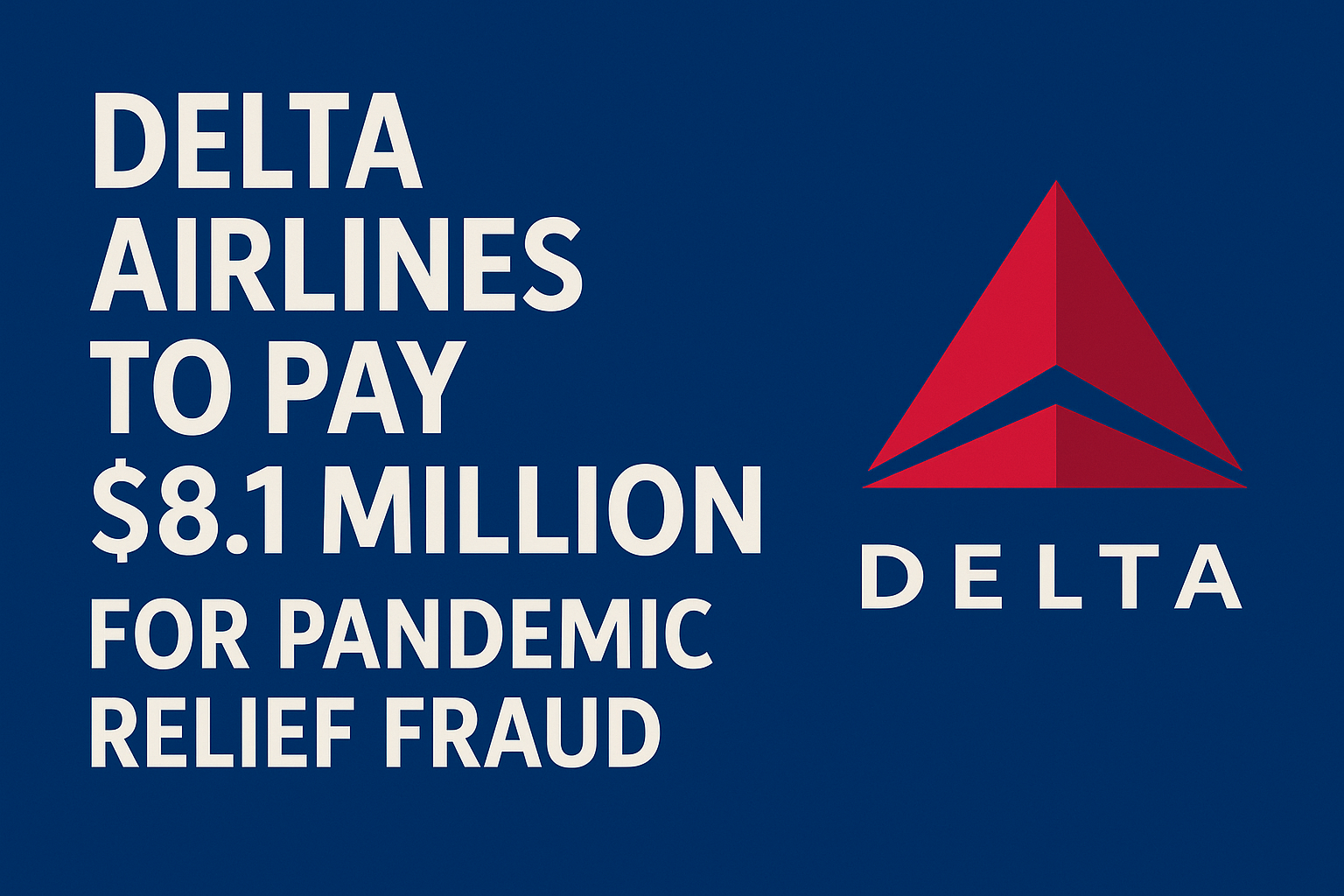
    Delta Airlines has agreed to pay $8.1 million to resolve allegations that it violated the False Claims Act by breaching executive compensation limits imposed by Congress as a condition for receiving federal COVID-19 relief.

    The relief funds came from the Payroll Support Program (PSP), created under the CARES Act. Between 2020 and 2023, Delta received nearly $11.9 billion, including $8.2 billion in grants that did not require repayment. In exchange, the airline agreed to cap compensation for executives who earned over $425,000 in 2019 until April 2023.

    According to the settlement, Delta broke that agreement by awarding pay packages that exceeded legal thresholds, then falsely certified compliance with the terms of the PSP and failed to alert Treasury of its breach.

    “When companies accept federal assistance, especially generous pandemic-relief funds like those at issue here, they owe a duty to the American people to respect the conditions placed on those funds,” said U.S. Attorney Theodore S. Hertzberg. “We will continue to enforce all available laws to punish the misuse of taxpayers’ money.”

    The case began when a whistleblower—a financial researcher—filed a qui tam lawsuit under the False Claims Act, a law that empowers private citizens to report fraud on the government’s behalf. As part of the resolution, the whistleblower (known legally as the relator) will receive $825,000 plus attorney’s fees.

    The qui tam case, United States ex rel. H. Remidez, LLC v. Delta Airlines, Inc., No. 1:23-CV-1116, was filed in the U.S. District Court for the Northern District of Georgia.

    The settlement was the result of an investigation led by the U.S. Attorney’s Office for the Northern District of Georgia, the DOJ Civil Division’s Commercial Litigation Branch, and the Treasury Department’s Office of Inspector General.