Category: anti-Kickback Statute

  • Michigan Home Health Owner Convicted in $1.6M Medicare Fraud Scheme

    Michigan Home Health Owner Convicted in $1.6M Medicare Fraud Scheme

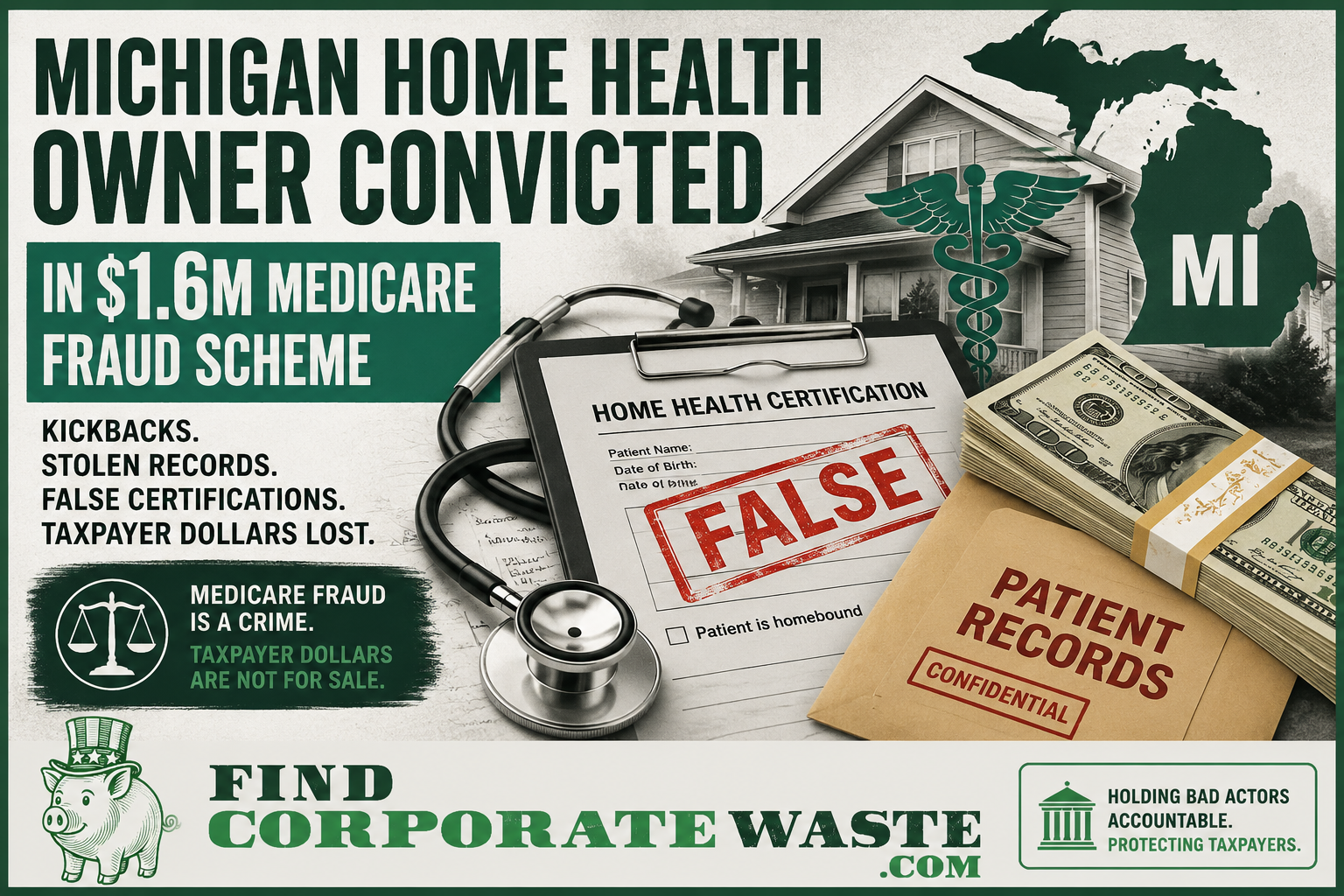
    A federal jury in the Eastern District of Michigan convicted Ruby Scott, a Michigan nurse and owner of Delta Home Health Care LLC, for a $1.6 million Medicare fraud scheme involving illegal kickbacks, stolen patient records, and false home health billing.

    According to the DOJ, Scott paid a discharge nurse at a Detroit hospital to identify Medicare patients and send their confidential records to Delta without the patients’ knowledge.

    From 2018 through 2021, Scott allegedly used those records to bill Medicare for home health services. The DOJ said she paid the nurse more than $130,000 through CashApp, PayPal, checks, and cash, including roughly $300 per patient when Delta successfully billed Medicare.

    Prosecutors said Scott falsely represented that doctors had certified patients as eligible for home health care, including that they were homebound, even though no doctor had evaluated those patients for Delta’s services. In some cases, Scott allegedly used real doctors’ identities to fabricate evaluations. One witness testified that a patient for whom Delta received thousands of dollars in Medicare payments never received services from Scott’s company.

    Delta also failed to maintain patient files for more than one-third of the patients it billed Medicare for. Medicare paid Delta more than $1.2 million for those patients alone. The DOJ said Scott caused approximately $1.6 million in losses to Medicare.

    The jury convicted Scott of five counts of health care fraud, conspiracy to defraud the United States and pay illegal health care kickbacks, and four counts of paying illegal health care kickbacks. She is scheduled to be sentenced on September 24, 2026.

    For Find Corporate Waste, this case shows how public health care dollars can be drained through kickbacks, fake medical necessity, stolen patient information, and false billing records. Medicare fraud is not victimless. Every false claim takes money from taxpayers, legitimate providers, and patients who depend on the system

  • Takeda to Pay $13.6M Over False Claims Act Allegations Tied to Physician Payments

    Takeda to Pay $13.6M Over False Claims Act Allegations Tied to Physician Payments

    Takeda Pharmaceuticals U.S.A. Inc. has agreed to pay $13,670,921 to resolve False Claims Act allegations involving improper payments to physicians who prescribed Trintellix, an antidepressant medication marketed for major depressive disorder. The Department of Justice said the alleged conduct caused false claims to be submitted to Medicare and other federal health care programs.  

    The settlement centers on the federal Anti-Kickback Statute, which prohibits offering or paying anything of value to induce referrals or prescriptions covered by Medicare, Medicaid, TRICARE, and other federal health care programs.

    DOJ alleged that from January 2014 through October 2020, Takeda paid improper remuneration to health care providers, including speaker honoraria and meals at high-end restaurants, to encourage prescriptions of Trintellix.  

    According to the government, Takeda selected certain providers for its Trintellix speaker bureau and gave them paid speaking opportunities with the intent that those payments and related benefits would influence prescribing decisions.

    The DOJ also alleged that some prescribers attended multiple programs on the same topic, received meals and drinks, and gained no real educational value from repeated attendance.  

    The case is important because it shows how False Claims Act liability can arise even when the drug itself is legitimate and the prescription may appear ordinary on paper. The issue is not simply whether a medication was dispensed. The issue is whether federal health care dollars were tainted by payments, perks, or side benefits that improperly influenced medical judgment.

    Assistant Attorney General Brett Shumate said that the DOJ remains committed to pursuing False Claims Act violations arising from illegal kickbacks, warning that such conduct can undermine patient trust and increase drug costs for taxpayers. The Eastern District of California, HHS-OIG, and the Defense Criminal Investigative Service also participated in the investigation.  

    This settlement also fits into DOJ’s broader enforcement posture. The release specifically ties the case to the Administration’s Task Force to Eliminate Fraud and the National Fraud Enforcement Division, both aimed at fraud, waste, and abuse in federal programs. DOJ emphasized that False Claims Act enforcement remains central to recovering taxpayer dollars and holding wrongdoers accountable.

    The Takeda settlement is another example that shows how federal fraud may not always look like a fake business or a forged invoice. Sometimes it involves more sophisticated schemes like a polished compliance program, a speaker event, a catered dinner, or a repeat “educational” session that quietly changes prescribing incentives.

    Find Corporate Waste exists to help taxpayers, whistleblowers, and concerned insiders spot the patterns others miss.

    If you have information about improper billing, kickbacks, false certifications, pandemic relief abuse, or corporate conduct that may have caused taxpayer money to be wasted, we want to hear from you. Federal fraud often hides behind paperwork that looks clean on the surface. The more people come forward, the harder it becomes for corporations to treat public money like private profit.